Showing posts with label Forts. Show all posts

Sunday, April 21, 2019

Perumukkal Fort, Perumukkal, Villupuram

Perumukkal Fort, Perumukkal, Villupuram
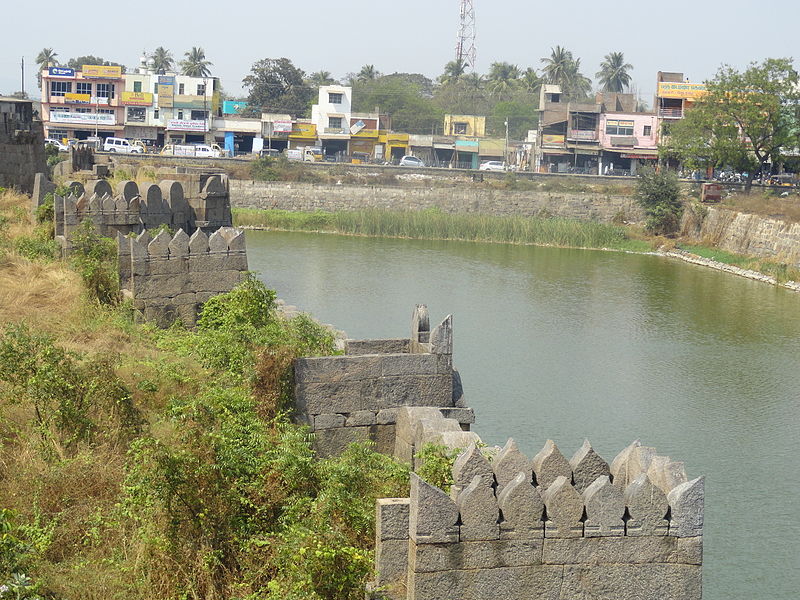
Perumukkal Fort is a historic fort, located at Perumukkal Village near Tindivanam Town in Villupuram District of Tamil Nadu. The Fort is in complete ruins only few walls and broken pieces of fort structures can be seen.


History
For brief details, please refer below link;
The Fort
The Perumukkal Fort is a small fort about 437 feet above sea level. It is situated on the Perumukkal Hill top. There are ruins of the fort, where it once stood. This fort has been subject to various conquests. In 1761, it was captured by Sir Eyre Coote of the British East India Company. In 1780 the fort was captured by Haider, and regained by the English in 1783. In 1790 it was taken by Tippu and after few years went back to British again.


Connectivity
For brief details, please refer below link;
Location

Friday, March 22, 2019

Droog Fort & View Point, Coonoor, Nilgiris

Droog Fort & View Point, Coonoor, Nilgiris
Droog Fort is a historic fort, located in Huligal, a mountainous town in picturesque Nilgiris Hills near Ooty Hill Station in Coonoor Taluk of Nilgiris District of Tamilnadu. Droog Fort is also called as Bakasuran Malai fort or Bakasuran Peak Fort. The historical Droog Fort is situated at an altitude of about 6000 feet above the lush plains, offers a spectacular view to the visitors and is one of the popular Coonoor tourist places.


Legends
According to mythological tales, the fort is linked with the legend of a local demon, Bakasuran. Due to this, it is also called Bakasuran Malai by the natives.


History
The fort was used as an outpost by Tipu Sultan in the 18th century.


The Fort & View Point
Droog Fort is situated at an altitude of about 6000 feet above mean sea level. The Droog Fort is in complete ruins with only one wall remaining. There is a View Point called Bakasuran Peak View Point. It offers a panoramic view of the surroundings. One can also capture the scenic beauty through the watchtower. This spot is an exceptional point for trekkers and adventure seekers. Neither does it leave behind the bird watchers. An exotic number of rare species of birds fly their way through the fort and also few Malabar squirrels and flying foxes. It is necessary to be extremely careful about bison that frequently roam around the premises.


As you stand in the view point facing the Ghat road, you can see Coonoor and the mountains on the west and north of Coonoor, dolphin nose, Kotagiri and even the hairpin bends of the Mettupalayam-Coonoor Ghat road. On the eastern edge of the mountains, you see the plains of Odanthurai, Mettupalayam, Further, to the south, you see the entire Mettupalayam town, the curves of Bhavani river and Vana Badrakaliamman temple.


Another amazing view that you can get from the mountain top is the view of Pilloor dam, which is in the eastern slopes of Nilgiris in the middle of a reserved forest. If you walk through a jungle for a few metres from the view point, you can reach a rocky place from where you can get a better view of the Pilloor dam. Again, one has to be very careful here, as it is in a dangerous elevation and if you fall down, there is not even a tree branch to hold you. The lush tea gardens cover most of the area in Bakasura Malai, Droog and Nonsuch. 


There are about 80 bisons in the area which roam inside the tea gardens. Bakasuran Malai is a great place for an excellent picnic. It is a great place for photography and bird watching. This is a less known place very close to Coonoor which can give you an unforgettable trekking experience. Near the Bakasura Malai village, there is a BSNL tower which is visible as you travel through the Ghat road. The tower is another great viewpoint and you can have a much closer look at the Ghat road from here. It is another dangerous edge, so one has to be very careful here.


Connectivity
Droog Fort & View Point is located at about 8 Kms from Huligal, 16 Kms from Coonoor, 14 Kms from Coonoor Bus Stand, 14 Kms from Coonoor Railway Station, 32 Kms from Ooty Bus Stand, 33 Kms from Ooty, 33 Kms from Ooty Railway Station, 33 Kms from Kotagiri, 41 Kms from Mettupalayam Railway Station and 78 Kms from Coimbatore Airport. To reach this place, one has to go up to Nonsuch Estate and trek for about 4 kms. This place demands moderate level trekking for about 1 Hour one way. Private Taxis are available from Ooty and Coonoor to reach this place.
Location

Tuesday, March 19, 2019

Nelliyalam Ruins, Gudalur, Nilgiris

Nelliyalam Ruins, Gudalur, Nilgiris
Nelliyalam Ruins are ruins of an ancient fort, palaces and temple complexes, located in Nelliyalam Village near Gudalur Town in Gudalur Taluk of Nilgiris District of Tamilnadu. Ruins from historical Ummatur dynasty can be seen at Kottakunnu (meaning fort hill in Malayalam) at Nelliyalam. The temple portion of the fort was only left, and the design is very similar to the architecture of buildings / palaces in Mysore and an Idol of Devi, Shiva Linga and Nandi can be seen in the temple structure.


Nelliyalam is located at about 30 Kms from Gudalur, 29 Kms from Gudalur Bus Stand, 55 Kms from Nilambur Railway Station, 80 Kms from Ooty, 79 Kms from Ooty Bus Stand, 79 Kms from Ooty Railway Station, 93 Kms from Malappuram, 98 Kms from Coonoor, 108 Kms from Kotagiri, 129 Kms from Mettupalayam Railway Station, 162 Kms from Coimbatore and 174 Kms from Coimbatore Airport. Gudalur is well connected to Ooty, Coonoor, Kotagiri and Kerala by Bus and private taxis.
Location

Thursday, August 16, 2018

Vellore Fort, Vellore

Vellore Fort, Vellore
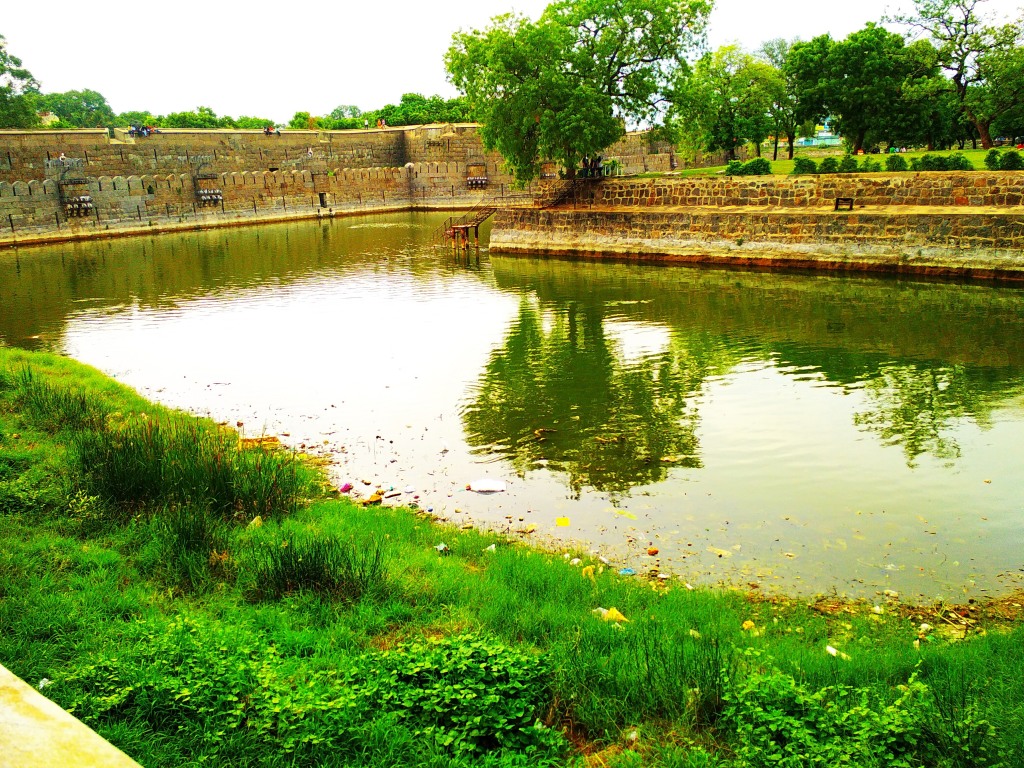
Vellore Fort is a large 16th Century fort situated in heart of the Vellore Town, in the state of Tamil Nadu built by Vijayanagara kings. The fort was at one time the headquarters of the Aravidu Dynasty of Vijayanagara Empire. The fort is known for its grand ramparts, wide moat and robust masonry. The fort's ownership passed from Vijayanagara kings, to the Bijapur sultans, to the Marathas, to the Carnatic Nawabs and finally to the British, who held the fort until India gained independence. Presently, Archaeological Survey of India maintains the fort.


During British rule, the Tipu Sultan's family and the last king of Sri LankaSri Vikrama Rajasinha were held as prisoners in the fort. The fort houses the Jalakandeswarar Hindu temple, the Christian St. John's Church and a Muslim mosque, of which the Jalakandeswarar Temple is famous for its magnificent carvings. The first significant military rebellion against British rule erupted at this fort in 1806, and it is also a witness to the massacre of the Vijayanagara royal family of Sriranga Raya.


History
For brief details, please refer below link;
Fort Complex
It is mentioned that there is no such fort on the face of earth like the one in Vellore. It had a deep wet ditch (moat) where once 10,000 crocodiles swarmed, waiting to grab every intruder into this impregnable fort. It has huge double walls with bastions projecting irregularly, where two carts can be driven abreast. The fort was constructed in granite from the nearby quarries in Arcot and Chittoor districts. It spreads over an area of 133 acres (0.54 km2) and is located at an altitude of 220 m (720 ft.) within a broken mountain range.


The fort is surrounded by a moat which was once used as an additional line of defense in the case of an invasion. It includes an escape tunnel leading to Virinjipuram about 12 km (7.5 mi) away, which could be used by the king and other royals in the event of an attack, later disputed by researchers of the ASI who found no evidence of existence of such passage. The fort is considered to be among the best of military architecture in Southern India and is known for its grand ramparts, wide moat and robust masonry.


The fort houses a temple, a mosque and a church, the renowned Vellore Christian Hospital, and many other buildings that are now used as public offices.
Jalakandeswarar Temple:
The Jalakandeswarar Temple, dedicated to Jalakandeswarar, (the original name of the deity was Jwarakandeeswarar) is noted for its sculptures, and speaks volumes of the exquisite craftsmanship of the highly skilled artisans of that period. The sculpture in the porch on the left of the entrance is a masterpiece appreciated by the connoisseurs of art and architecture. The temple was long used as an arsenal, and remained without a deity, although several years ago it was sanctified with an idol of Lord Shiva.
Vellore Fort Mosque:
The mosque inside the fort was constructed during the last Arcot Nawab's period. Presently, Muslims are not allowed to pray inside the fort mosque.
For brief details, please refer below link;

St. John's Church:

St. John's Church, Vellore located inside the Vellore Fort was raised in 1846 by the Government of Madras for the officers and men of the East India Company military station. The church is named after St. John the Evangelist. However, the church was never officially consecrated and hence not officially named as St. John’s Church. St. John's Church is the oldest standing church in the Vellore Diocese. The church was constructed during the early British period (Robert Clive, East Indian Company).
For brief details, please refer below link;
Tipu Sultan & Hyder Mahal:
The Tipu Mahal and Hyder Mahal are the palaces located inside the Vellore Fort. The Tipu Mahal has 180 rooms with a central pillar hall and the Hyder Mahal on the same campus housed over 200 rooms.
For brief details, please refer below link;
Government Museum:
Government Museum is a multi-purpose museum maintained by the Department of Museum Government of Tamil Nadu. Its treasures include ancient- and present-day curiosities relating to subjects such as botany, anthropology,  geologynumismatics, pre-history, and zoology. Historical monuments of the erstwhile composite North Arcot district are gracefully depicted in the gallery. This museum is kept open on all days between 9.00 a.m. and 12.30 p.m. and 2.00 p.m and 5.00 p.m. except on holidays, and admission fee is INR 5/-.
For brief details, please refer below link;
Royal prisoners
Vellore Fort has housed several royal captives over its history. After the fall of Srirangapatnam in 1799 and the death of Tipu Sultan, his family, including his sons, daughters, wife and mother (who was the wife of Hyder Ali), was detained in the fort. After the 1806 Sepoy Mutiny, the British transferred Tipu's sons and daughters to Calcutta. The tombs of Bakshi Begum (died 1806), widow of Hyder Ali and Padshah Begum, Tipu's wife & sons, who died in 1834 are located within a kilometer of the eastern side of the fort. Vellore Fort also became the final destination for the last ruling monarch of Sri LankaSri Vikrama Rajasinha (1798–1815). The king and his family were kept as prisoners of war at this fort for 17 years with his family. His grave can be found little away from the fort along with the last raya kings of Vijayanagara Empire.
Culture
In 1981 the Post and Telegraph Department of India released a stamp commemorating the fort, and in July 2006 a stamp marking the 200th anniversary of the Mutiny was released by the Tamil Nadu Chief Minister.
Timings
The fort remains open to visitors from 8 am to 8 pm in the evening on all days except Fridays. Visitors have to purchase tickets which are sold outside the fort to enter.
Connectivity
For brief details, please refer below link;

Government Museum, Vellore Fort, Vellore

Government Museum, Vellore Fort, Vellore
Government Museum is located inside Vellore Fort Complex in Vellore Town in Vellore District of Tamilnadu. Museum was established on 6th September 1985 in Lutchmanasamy Town Hall near Old Bus stand. Due to scarcity of space for further Development of museum, it was shifted to inside of the Vellore fort in 1st April 1999.


Museum
Vellore Museum’s overall area is about 9000 square feet in which the display area is 5000 square feet. The Museum showcases objects of historic value, recovered from the region. The museum has 2896 exhibits, both displayed and reserve. One of the galleries in the museum holds a display of the historical monuments of the composite North Arcot District. The museum also has an exhibit of a bronze double antenna sword, which belongs to the Vellore Taluk and dates back to around 400 BC. Among other exhibits of the museum are stone sculptures from the late Pallava to the Vijayanagar periods and ivory chess boards and coins that were used by Vikrama Raja Singha.


Museum has 8 galleries. They are;
·        District Gallery
·        Stone Sculptures Gallery
·        Pre-history-philately Gallery
·        Paintings Gallery
·        Zoology Gallery (including botanical specimens)
·        Bronze Gallery
·        Coins Gallery
·        Anthropology Gallery
Museum Timings
Museum remains open from 09.00 AM – 12.30 PM and 02.00 PM – 05.00 PM on all days except on holidays. Admission Fee is INR 5.
Connectivity
For brief details, please refer below link;