Showing posts with label Tribal Temples. Show all posts

Sunday, January 10, 2021

Poomalai Appar Temple, Neivasal, Cuddalore

Poomalai Appar Temple, Neivasal, Cuddalore

Poomalai Appar Temple is a Hindu Temple dedicated to village deity Poomalai Appar located in Neivasal Village in Thittagudi Taluk in Cuddalore District of Tamil Nadu. Presiding Deities are Poomalai Appar, Semmalai Appar and Muthu Karuppan. The temple is situated on confluence of Chinnaru River and Vellaru River.

Legends

As per legend, once, seven fisherman from Pennadam came here to catch fish at confluence of the rivers. They came at midnight thinking it as early morning. It is believed that gods from this temple used to venture out for hunting and play. When the gods noticed the fishermen, they got angry and cursed them to lose their eyesight. Realizing their folly, the fishermen and begged for forgiveness to the gods. The gods felt pity and restored their eye sight. In memory of this event, their heirs installed the idols of seven fisherman in this temple. Even to this day, their heirs worship Poomalai Appar and offer fishing net every year.

The Temple

The temple is situated amidst groves at the confluence of Vellaru and Chinnaru Rivers.  Presiding Deities are Poomalai Appar, Semmalai Appar and Muthu Karuppan. Poomalai Appar and Semmalai Appar are considered as brothers. All the gods are housed in their respective shrines. There are shrines for Konga Karuppu, Siddhanathar, Kulla Karuppu, Pachaiyamman and Murugan in the temple premises.

There is a shrine for Veeranar outside the temple premises. He is considered as the guardian deity of this temple. This Shrine is situated at about 50 meters from the main temple. Devotees need to worship him first and then only enter the main temple. The temple has seven idols of fisherman in its premises.

Festivals

Mondays are Fridays are considered as auspicious days for worship.

Prayers

People pray to Muthu Karuppan to get relief from diseases, for child boon, to get back the lost items and to get relief from legal disputes.

Connectivity

The temple is located at about 2 Kms from Avinankudi Bus Stop, 8 Kms from Pennadam, 9 Kms from Pennadam Railway Station, 9 Kms from Thittagudi, 86 Kms from Cuddalore and 107 Kms from Trichy Airport. The temple is situated on Virudhachalam to Thozhuthur Route. Share Autos are available to reach this temple from Avinankudi Bus Stop.

Location

Friday, January 8, 2021

Karuppannar Swamy Temple, Kottaram, Cuddalore

Karuppannar Swamy Temple, Kottaram, Cuddalore

Karuppannar Swamy Temple is a Hindu Temple dedicated to Karuppannar, a village deity, located in Kottaram Village near Thittagudi in Thittagudi Taluk in Cuddalore District of Tamil Nadu. The Temple is situated on the northern banks of Vellaru River.

Legends

Karuppannar came to court to testify in favour of Kottaram Villagers:

Once, the neighboring villagers took the Karuppannar idol to conduct a festival in their village. The Villagers refused to return the idol of Karuppannar back to the villagers of Kottaram even after the festival was over. The issue was brought to the court, Karuppannar came to the court in a horse for testifying. Later on, the judgement was given in the favour of Kottaram.

Sira Meeta Karuppannar:

As per legend, it is believed that Lord Karuppannar performed the delivery of pregnant lady. As Karuppannar took the baby from the womb (a sort of Jail for the baby), he came to be called as Sirai Meetta Karuppannar.

Connectivity

The Temple is located at about 200 meters from Kottaram Bus Stop, 1.5 Kms from Avinankudi, 7 Kms from Thittagudi Bus Stand, 8 Kms from Thittagudi, 9 Kms from Pennadam, 10 Kms from Pennadam Railway Station, 87 Kms from Cuddalore and 106 Kms from Trichy Airport. Devotees need to travel in Thittagudi to Pennadam Route, take a left diversion road at Avinankudi to reach this Temple.

Location

Sunday, August 2, 2020

Ayyanar Temple, Sathanur, Thanjavur

Ayyanar Temple, Sathanur, Thanjavur
Ayyanar Temple is a Hindu Temple dedicated to Lord Ayyanar located in Sathanur Village near Aduthurai Town in Thiruvidaimarudur Taluk in Thanjavur District of Tamil Nadu. Sathanur is also considered as Avathara Sthalam for Siddhar Thirumoolar, one of the famous 18 Tamil Siddhars and author of Thirumandiram. The Temple is situated adjacent to Thirumoolar Temple. The Temple is situated on the southern bank of Veera Cholan River.


The Temple
This Temple is facing towards east with an entrance arch. The entrance arch has stucco images of Ayyanar with Poorna and Pushkala. A horse idol can be found facing the sanctum. The Sanctum houses Ayyanar along with consorts Poorna and Pushkala. There is an east facing shrine for Madurai Veeran adjacent to the sanctum. There are shrines and idols of Saptha Kannigais, Moolan and Ganapathy in the temple premises. Paintings of Thirumoolar life can be seen in the temple.


Connectivity
The Temple is located at about 4 Kms from Thiruvavaduthurai, 4 Kms from Aduthurai Bus Stand, 5 Kms from Aduthurai, 5 Kms from Aduthurai Railway Station, 6 Kms from Narasingampettai Railway Station, 21 Kms from Mayiladuthurai, 17 Kms from Kumbakonam, 18 Kms from Kumbakonam Railway Station, 58 Kms from Thanjavur and 119 Kms from Trichy Airport. The Temple is situated on Aduthurai to Mangainallur Road.
Aduthurai Town is situated on the Mayiladuthurai – Kumbakonam highway, and buses are available from Mayiladuthurai and Kumbakonam. Various private and government long haul buses stop here connecting this town with major cities like Chennai, Coimbatore and Madurai. Bus facilities to Keezh Maruthuvakudi from Aduthurai are less frequent. Hence, hire autos from Aduthurai to reach this Temple.

Tuesday, July 28, 2020

Pachaiyamman Temple, Kumarai, Cuddalore

Pachaiyamman Temple, Kumarai, Cuddalore
Pachaiyamman Temple is a Hindu Temple dedicated to village deities Pachaiyamman and Poomalai Appar located in Kumarai Village in Thittagudi Taluk in Cuddalore District of Tamil Nadu. The Temple is believed to be built in 19th Century CE.


Legends
Once, a Villager lived in the foot hills of Podhigai Mountains, had seven daughters. He struggled to get them married to suitable bridegrooms. On seeing their father struggle, the daughters installed Seven Shiva Lingas made of sand on the river bank and worshipped Lord Shiva to clear their worries. Lord Shiva was pleased by their devotion and decided to play with them. He came to the river bank in the guise of a young farmer and tried to hug the girls. The girls were shocked and ran into the nearby forest losing contacts with each other. It took around one year for them to rejoin together. Kathayi, one of the seven girls, had a child in her hip.


All the other six sisters enquired about the child. Kathayi said that the young farmer forced her, and child was born to him. None of this sisters believed this story. Kathayi started crying and asked her sisters what she had to do so that they believe her. The sisters asked her to walk into fire along with her child to prove her story. She did as per their sisters wish and came out of the fire unharmed. Lord Shiva appeared before them and said it was his play with the girls. Further, he stated that seven girls would become Village deity of the seven villages where these girls ran away to protect them from him.


The Seven girls should help in relieving the fears of the villagers. Seven Munis would assist them in their duties. Subsequently, the temples were built in their respective villages. The Seven Temple are Sannasi Nallur Parvathy, Puliyur Pattathal, Kaalingaraya Nallur Arunthavam, Vasithur Pooval, Kumarai Pachaiyamman, Venganur Maraliamman or Kathayi and Arakandanallur Poongavanam. Sannasi Nallur Parvathy is the eldest sister. All these villages are situated in Perambalur, Cuddalore and Villupuram District.


The Temple
The Temple is facing towards east with three tiered Rajagopuram. Presiding Deities of this Temple are Poomalai Appar and Pachaiyamman. There are shrines for Vinayaga, Murugan and Navagrahas in the temple premises. Stucco idols of horses, dogs and elephants can be seen facing the sanctum. Large stucco idols of Seven Munis can also be found in the temple premises.


Festivals
Panguni Uthiram and Avani Month Fire walking festival are the most famous festivals celebrated here.
Connectivity
The Temple is located at about 8 Kms from Thittakudi, 9 Kms from Thittakudi Bus Stand, 12 Kms from Veppur, 19 Kms from Pennadam Railway Station and 109 Kms from Trichy Airport. The Temple is situated on Thittakudi to Kaliyamedu Route via Nedunkulam.
Location

Sunday, January 19, 2020

Nagaraja Temple, Manjakombai, Kundah, Nilgiris

Nagaraja Temple, Manjakombai, Kundah, Nilgiris
Nagaraja Temple is a Hindu Temple located in Manjakombai (Manihada) Village in Kundah Taluk near Ooty Hill Station in picturesque Nilgiris Hills in Nilgiris District of Tamil Nadu. The deity in this temple is considered a powerful. The temple lies in a calm and serene location surrounded by fresh air which creates a perfect environment for worship and meditation.


Legends
Construction of this Temple:
The people of Manjakombai began digging the ground for collecting sand in order to build a temple in the place. On digging for a few meters, they heard a sound and is said to have found a Nagaraja idol and a couple of caves beneath the ground. A rock is believed to have obstructed the construction work on further digging, which upon removal had revealed the presence of a live snake. A temple for the Goddess and Nagaraja were later raised in the same place. It is that snake which is still believed to be alive.
Underground Tunnel between Nagaraja & Heddhai Amman Shrine:
There is yet another specialty attached to this temple. A live snake is believed to reside within the sanctum sanctorum of Sri Nagaraja. It is also believed that this snake had created an underground pathway or tunnel between the Nagaraja temple to the Heddhai Amman Temple in order commute between the two shrines.
Sri Rama foot Print:
According to hearsay, while Lord Rama was passing through this temple, he has left his print of his feet on a rock here during his 14 years Vanavasa – forest life. There is also a feet symbol on a rock confirming this faith. A large number of Rama devotees visit this temple. The high monkey population in the locality support the Ramayana theory.
The Temple
Presiding Deities of this temple are Lord Nagaraja and Goddess Heddhai Amman. A separate shrine dedicated to Goddess Santhanalakshmi is also found in this temple. The feet symbol of Lord Rama is revered highly by the devotees. Banyan tree is the holy tree of this temple while Santhana Kulam is its holy spring.


Hero Stones
Rare hero stones, mostly dating to a period between the 2nd and 14th century can be found near Manjakombai Nagaraja Temple in Melur. The hero stones and dolmens are the only ancient monolithic structures found in the upper plateau of the Nilgiris, and a few stones, carved more recently, even tell of the British’s arrival in the Nilgiris. Most other hero stones are found at lower altitudes, in areas bordering present-day Karnataka. Most of the stones date back to the 11th and 14th century during the time of the Hoysala and Vijayanagara dynasties, whose militia, along with their families, settled here.

The carvings show the valour of those who died protecting their people and cattle from carnivores such as tigers and leopards. The Kurumbar tribes, who are renowned for their stone-carving abilities, are believed to have a historical link to the site as well and could have been the first settlers in this particular region to have carved the earliest hero stones. Unfortunately, the picturesque location of the hero stones, surrounded by beautiful Shola forests, have also led to them being ignored and not being protected for their historical and cultural value.
Temple Opening Time
The temple remains open from 6.00 a.m. to 11.00 p.m. and 5.00 p.m. to 8.00 p.m.
Festivals
The annual fire pit (generally called flower pit) festival is celebrated in the temple on May 1st and 2nd. On the days of fasting, every devotee must wear only yellow or red coloured clothes with a sacred garland around their necks. Women devotees should at the least have a red or yellow coloured towel adorning their necks. It is believed that a devotee, who walks on the fire pit when fasting, would receive the immense blessings of the deity. Their wishes and desires are said to get fulfilled. The crowd turn up for this festival easily exceeds fifty thousand. A large number of devotees throng the temple on new moon days too.
Prayers
Pilgrims are attracted to this the temple due to its serene location and greenery, which makes this an ideal place for getting mental peace and happiness. On performing the necessary pujas in the Nagaraja shrine, devotees usually take a piece of white cloth and a lime to the shrine of the Goddess Santhanalakshmi. Going around this shrine, they tie a tiny toy cradle with this white cloth in the temple’s tree for child boon. There is also a belief that people addicted to liquor and tobacco are cured of these bad habits on offering their prayers to the deities here.
Those childless couples, who were blessed with a child on worshiping this deity, usually undertake to walk on this fire pit as a mark of devotion and gratitude to the deity. Tonsuring is also done by the devotees as a mark of respect to this god. People affected by various Naga Doshas (adversities in their horoscope due to snakes) offer milk to the anthill, which is considered scared. Following this ritual continuously on all the new moon days (Amavasya) is said to relieve the person of Naga Doshas.
Contact
Nagaraja Temple,
Manihada - Manjakombai,
Kundah Taluk,
Nilgiris District – 643221
Phone: +91 423 228 6258
Mobile: +91 94869 04422
Connectivity
The Temple is located at about 21 Kms from Kundah, 23 Kms from Ooty, 23 Kms from Ooty Bus Stand, 24 Kms from Ooty Railway Station, 25 Kms from Coonoor, 45 Kms from Kotagiri, 50 Kms from Mettupalayam Railway Station, 84 Kms from Coimbatore and 89 Kms from Coimbatore Airport. Ooty is well connected to Coimbatore, Kerala and Karnataka. Private Taxis are available from Ooty, Coonoor and Kotagiri to reach this place.
Location | Photos

Tuesday, March 19, 2019

Nambalakottai Temple, Gudalur, Nilgiris

Nambalakottai Temple, Gudalur, Nilgiris
Nambalakottai Temple is a Hindu Temple dedicated to Tribal God Betarayasvami (Lord of the Hunt) near Gudalur Town near Ooty Hill Station in Gudalur Taluk in Nilgiris District of Tamilnadu. This Temple is one of the ancient shrines in Nilgiris District. This Temple is significant to the cultural ethos, religious life, and rituals of the Mandadan Chettis.

History
Though Avvai Duraisamy Pillai seemed to have correctly identified (as early as 1957) this place as Umbarkadu of the Sangam period (Padirruppattu texts). The seriousness of the suggestion seems to have been ignored by several later authors on the subject. The tendency to identify Umbarkadu with Anaimalai in the Coimbatore region (mainly basing on the words meaning "elephants" and "hills") is not quite sustainable. There is little evidence to show that Anaimalai would have been populous place during Sangam period.

On the other hand, Wayanad region wherein is situated Nambalakod (the present day form of Umbarkadu) appeared to have been a very active zone. The brahmadeya of 500 villages endowed by Imayavaramban Nedum Cheraladan in Umbarkadu to poet Kannanar is a pointer in this regard.  Avvai Duraisamy Pillai further suggests that the present day Cannanore on the western coast was probably named after poet Kannanar. If this were so, the brahmadeya limits probably extended from Cannanore to Nambalakod.

A significant link in this connection is that the Nilgiri – Wayanad even during the British revenue settlement in the 19th Century had formed part of the jurisdiction of the Raja of Kottayam – a principality in the vicinity of Cannanore. The Badaga name for Nambalakod or Numbelahcotah is "Kottebetta". It refers to the famous fort in Umbarkadu overrun by Palyanai Selkely Kuttuvan.

The original site of the fort, even to the present day, exists a hoary shrine complex called the Betarayasvami Kovil (shrine of the "Lord of Hunt") sacred both to the Todas and Mandadan Chettis. The shrine is maintained by the Janmi of Nilambur in Kerala. The priest at the shrine complex claimed that according to astronomical deductions based on documents at Nilambur, the shrine complex is 1700 years old.

The place is situated at about 3513 feet height, above mean sea level, the military importance of this place in the olden days cannot be overlooked. With the Nilgiri hills at the backdrop including a view of river Pykara and the vast expanse of territory running west towards the coast, the place must have indeed been a strategic one.

Connectivity
The Temple is located at about 50 meters from Nambalakottai Bus Stop, 3 Kms from Gudalur Bus Stand, 4 Kms from Gudalur, 5 Kms from Srimadurai, 53 Kms from Nilambur Railway Station, 55 Kms from Ooty, 54 Kms from Ooty Bus Stand, 54 Kms from Ooty Railway Station, 90 Kms from Malappuram, 73 Kms from Coonoor, 83 Kms from Kotagiri, 104 Kms from Mettupalayam Railway Station, 137 Kms from Coimbatore and 149 Kms from Coimbatore Airport. Gudalur is well connected to Ooty, Coonoor, Kotagiri and Kerala by Bus and private taxis.
Location

Friday, February 8, 2019

Beeramukku Temple, Ebbanad, Ooty, Nilgiris

Beeramukku Temple, Ebbanad, Ooty, Nilgiris
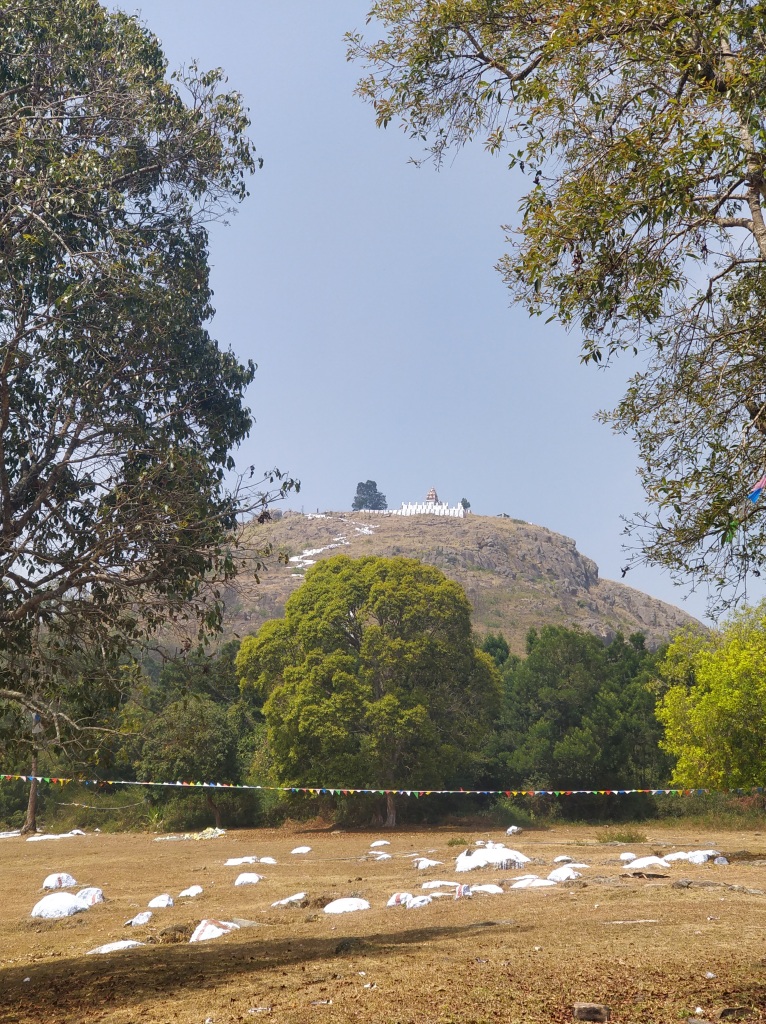
Beeramukku Temple is a Hindu Temple dedicated to local deity equivalent to Lord Shiva located in Ebbanad near Ooty in Nilgiris District of Tamil Nadu. Ebbanad is considered as the vegetable bowl of the Nilgiris. The Temple is situated atop a hillock on the outskirts of Ebbanad village. Pilgrims need to trek through forest to reach the Temple. Arduous Trek to the Temple will be rewarded with 360-degree view of Ooty. 


The Temple is located at about 2 Kms from Ebbanad, 8 Kms from Anikorai, 18 Kms from Ooty Bus Stand, 23 Kms from Ooty Railway Station, 25 Kms from Ooty, 27 Kms from Kotagiri, 29 Kms from Coonoor, 58 Kms from Mettupalayam Railway Station and 104 Kms from Coimbatore Airport. Ebbanad can be easily accessed from Ooty via Anikorai and Thenadukombai. It can also be accessed from Kotagiri, via Kattabettu and Iduhatty. There are buses plying from both Ooty and Kotagiri. You could also hire a car from either place.