Showing posts with label Gardens. Show all posts

Sunday, January 19, 2020

Sim's Park, Coonoor, Nilgiris

Sim's Park, Coonoor, Nilgiris
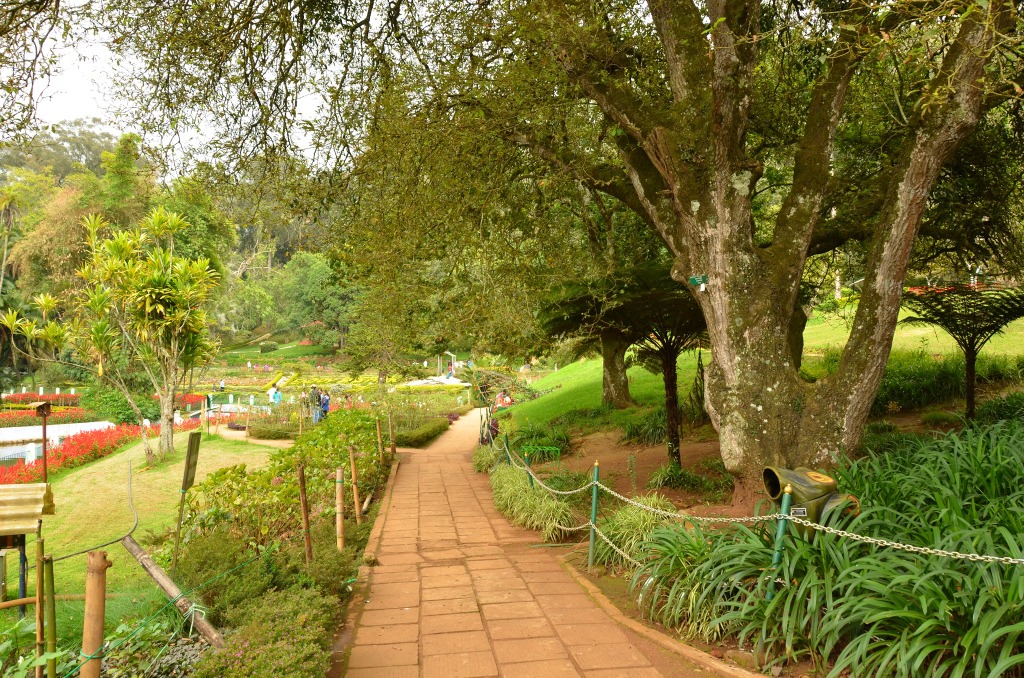
Sim's Park is a public park, located in Coonoor Town in picturesque Nilgiris Hills near Ooty Hill Station in Coonoor Taluk of Nilgiris District of Tamilnadu. It is an important tourist place to visit in Coonoor, at a height of 1780 meters above mean sea level. It extends over an area of 12 hectares of undulating land and possesses a number of natural advantages.


History
This is an unusual park-cum-botanical garden that was developed around the natural contours of the land more than a hundred years ago by Mr. J.D. Sims and Major Murray in the year of 1874. 


The Park
The Park extends over an area of 12 hectares. This is a natural garden, situated in deep ravine. The Nilgiris has a unique tropical mountain climate, so the garden has the ideal climatic conditions for growing flowers and trees. Temperature variation is less, and the rainfall distribution is uniform in the locale, which results in a long flowering season. The garden is visited by thousands of tourists throughout the year and even in winter. The natural shola with winding footpaths all over the higher slopes of the park is the most distinctive and picturesque are the main feature of this park.


At the head of the gardens the well-kept lawns, the artistically laid out ornamental beds, looking beautiful and lacking no wealth of the flowering plants or shrub in great variety and color are great feasts to the eyes.  Naturally occurring trees, shrubs and creepers are in the park as are many unusual species of plants that have been brought in from a variety of places around the world. The main event in this park is an annual fruit show and vegetable show held in May.


The garden has some rare economic trees like Rudraksha - bead tree, Cinnamomum, Queensland karry pine, a handsome ornamental tree and graceful trees like Araucaria, Quercus, Phoenix, Magnolia, Pine, Tree ferns, Turpentine,  Camelliathis is all are as many attractions in this park. There is a glass house housing different ornamental plants and flowers. On the other side of the park rose garden are maintained. This park has more than 1000 species of 255 genres belonging to 85 families widely covering different group of plants.


Section – I:
It extends to an area of 0.85Ha and forms the entrance of the park. The flower beds are neatly laid out in such a way that they merge with the landscape. It has got a small hemispherical lawn made up of kikuyu grass. Ashoka pillar at the center adds the charm to the lawn. Nearly 80 tree species and shrub species of different families can be seen. Acacia ducurrens, Eucalyptus ficifolia, Agathe’s robusta, Hymemospermum, Ternsfroemia japonica are some of the above species. Quercus sessilifloia, cinnamomum camphora, podo-carpus taxifolia, Bucklandia populnea were the old trees planted in the year 1980.
Section – II:
It comprises of an area of 0.42Ha. A Summer House is situated at the center. A well-maintained Azalea hedge and shrubbery are the features of this section. It comprises of 38 number of different trees and shrub species of various families. Some of them are Cedrella toona, Dracaena reflexa, Elaeocurpus ganitrus, Araucaria bidwilli, Sauraia nepalensis, Araucaria cookii, Camellia japonica, Magnolia grandiflora, Prunus pissandii, Pieris owalifolia, Eucalyptus amygdalina, Cinnmomum camphora, Juniperus sedfordiaha and Thuja filiformis. Among them, the ‘Araucaria bidwilli’ is the oldest tree planted in the year 1885.
Section – III:
It consists of an area of 1. 39Ha. There are about 92 different species of trees and shrubs hailing from different families. Photinia lindleyana, Glochidon ellipricum, Vaccinium leschenaultii, Acer laenigatum, Rhododendron arboreum, Eugenia calophyllioocia, Ilex wightiana, Macararga indica, Prunus puddum, Meliosma arnottiana, Peltophorum abricanum, Diospyros Virginiana are some of the tree species in the IIIrd   section. Among them, phofinia lindleyana in the oldest tree planted in the year 1889.
Section – IV:
It is consists of an area of 1.08Ha and the area is almost formed a green patch due to the presence of kikuyu grass. A good view of the park especially the Island area, Pond Shola areas of the park can be seen from this section. Nearly 71 numbers of different trees and shrubs can be found in this section of the park. Cotoneaster frigid, Arbuts rollionsii, Eucalyptus robusta, Casuarina marginata, Nerium oleandes, Cupressus obtusa, Hypericum mysorensis and Sehima wallichi are some of the trees in the section.
Section – V:
It extends to an area of 1.38Ha and forms the topmost terrace of the tennis garden. It accounts for 45 numbers of different tree and shrub species of which Quercus sessiliflora is the oldest tree planted in the year 1880. Michelia champaca, Albizzia falcate, Laurus nobilies, Betula alnoides, Rhus succedanea, Sophora glance, Tristkaia conferta, Alnusnepalensis are the important trees to be seen in the section.
Section – VI:
It covers an area of 2.2Ha and claims to be the biggest section among the 8 sections. It starts from the north east portion of the park and ends in the south west side. Nearly 120 varieties of different kinds of tree and shrub species belonging to different families can be seen in this section. The two Eucalyptus eugenoides trees planted in the year 1880 are the oldest trees of the park. The other important trees are Eugenia Calophyllifolia, Celtis serofina, Golchidon ellipticum, Vaccinium leschenaultia, Pinus lorgifolia etc. The tennis garden with beautiful blue grass lawn surrounded by nearly 1000s of rose plants adds the charm to the section.
Section – VII:
It forms the area around the Island garden and claims an area of 0.90 Ha. After the construction of stone structure in the Island, the section is conveniently divided into two portions namely Island garden and small Island garden. The rose plants of different groups viz Hybrid types, Floribunda and Polyanthe types gives a pleasant appearance to the visitors. Vaccinium leschenaultii planted in the year 1895 is the oldest tree in the section.
Fruit Show:
The two-day fruit show is conducted in Sim’s Park, Coonoor during the last week of Saturday, Sunday of May. The event is organized by the Department of Horticulture and has been held annually for 56 years. It attracts about 25,000 attendees.
Connectivity
Sim's Park is located at about 1 Km from Coonoor, 3 Kms from Coonoor Bus Stand, 3 Kms from Coonoor Railway Station, 20 Kms from Ooty Bus Stand, 22 Kms from Ooty, 22 Kms from Ooty Railway Station, 17 Kms from Kotagiri, 36 Kms from Mettupalayam Railway Station and 73 Kms from Coimbatore Airport. Private Taxis are available from Ooty and Coonoor to reach this place.
Location

Government Rose Garden, Ooty, Nilgiris

Government Rose Garden, Ooty, Nilgiris
Government Rose Garden is a public garden located in Ooty Town in Ooty Taluk of Nilgiris District of Tamilnadu. The Government Rose Garden (formerly known as the Jayalalithaa Rose Garden, Centenary Rose Park and Nootrandu Roja Poonga) is situated on the slopes of the Elk Hill in Vijayanagaram of Ooty Town at an altitude of 2200 meters.


History
The Rose Park was established at Vijayanagaram in Ooty town to commemorate the Centenary Flower Show in the Government Botanical Gardens, Udhagamandalam in May 1995. The flowers are arranged in five curving terraces covering four hectares. The garden is maintained by the Tamil Nadu Horticulture Department.


The Rose Garden
The Government Rose Garden was established in an area of 4.40 hectares spread over five terraces. The Rose Garden is situated in the lower slopes of the Elk Hill facing the Udhagamandalam town. There are five terraces in the Garden. The first terrace situated just below the approach road, has a miniature rose gallery. The second terrace being the largest terrace is the main feature of the garden. The slope on the upper side is beautifully landscaped with green kikuyu grass, foliage and flowering plants. This terrace accommodates important and popular varieties of rose plants. The latest varieties were planted here by grouping this based on shades like Vermillion, White, Yellow, Blue, Red, Pink, Mixed, Bicolour etc., Roses were planted on either side of the terrace leaving centre part as lawn, which is the living area of the garden.


There is a Nila Maadam, an observation platform on the second terrace. From the Nila Maadam, tourists can observe the entire rose garden. The third terrace is a small and elegantly designed terrace which ends with “Heritage section”. This looks like a bow and accommodate about 170 rose varieties of floribunda. This terrace is called as the Rainbow. The visitors can enter this terrace through the service road at northern end and also from the second terrace. The fourth terrace is a wide terrace, almost rectangular in shape. This terrace is also planted with beautiful varieties of the roses on either side and two elegant fountains steal the show. The fifth terrace is also planted with most collection of rose varieties.


Ooty has a unique tropical mountain climate, hence the garden has the ideal climatic conditions for growing roses. Temperature variation is low, and the rainfall distribution is uniform, which results in a long flowering season. The garden is visited by thousands of tourists throughout the year, even in winter when it is not the flowering season. Initially, when the gardens were developed, 1,919 varieties of roses with 17,256 rose plants were planted. Today there are more than 20,000 varieties of roses of 2,800 cultivars. It is one of the largest collections of roses in India.


The collection of roses includes Miniature Roses, Ramblers, Hybrid Tea Roses, Yakimour, Polyanthas, Papagena, Floribunda and roses of unusual colours such as green and black. The varieties of rose plants planted here were assembled from different sources around the world. The garden has been laid out with rose tunnels, pergolas and bowers with rose creepers.


The garden includes major attraction such as arches, bowers, umbrellas, fountains, Nila Maadam, viewpoints and Gazebos. The entire Rose Garden is in a steep slope. The landscape has been developed in such a way that the entire Rose Garden will be visible when one stands in the four viewpoints of the garden. Recently, a Heritage Rose section was established exclusively with oldest varieties of Roses evincing academic interest.  The garden also features a statue of an angel amidst the roses.


Recognition
The rose garden received the Garden of Excellence Award for being the best rose garden in south Asia, from the World Federation of Rose Societies in May 2006, in Osaka, Japan. This garden is one of the 35 gardens worldwide to have received this award.
Annual Rose Show
Every Year Annual Rose Show is being conducted during 2nd week of May (which is the peak season in Nilgiris) to enable the numerous tourists from India and all over the world to witness the elegance of the Rose Varieties which are in full bloom during those days. A Rose competition is also being held, so that the local public can participate and display the Rose grown by them in their homes.
Garden Timings
The opening and closing time of the Government Rose Garden is 8.30 AM to 6.00 PM daily.
Entry Fees
·        20 per person
·        30 for Still Camera
·        75 for Video Camera
Visitors
On an average eight lakh visitors enjoy this fabulous collection of Roses every year which has become one of the Best Rose Garden in the whole of India.
Connectivity
Rose Garden is located at about 2.5 Kms from Ooty, 2 Kms from Ooty Bus Stand, 2 Kms from Ooty Railway Station, 18 Kms from Coonoor, 30 Kms from Kotagiri, 49 Kms from Mettupalayam Railway Station, 83 Kms from Coimbatore and 86 Kms from Coimbatore Airport. Ooty is well connected to Coimbatore, Kerala and Karnataka.
Location

Government Botanical Gardens, Ooty, Nilgiris

Government Botanical Gardens, Ooty, Nilgiris
Government Botanical Gardens is a government botanical garden located in picturesque Nilgiris Hills in Ooty Town in Ooty Taluk of Nilgiris District of Tamilnadu. It ascends the slopes of the hill at an elevation of 2250–2500 metres above Mean Sea Level. It is maintained by the Tamil Nadu Horticulture Department.


History
The Government Botanical Garden, Ooty was established in 1848. Its architect was William Graham McIvor. The Marquis of Tweedale prepared the initial layout during the late 1840s. The gardens were established by a subscription of Rs 3 per month amongst the European residents for the purpose of supplying vegetables at a reasonable cost. During the time, Ooty was under the British control, considerable cultivation of vegetables for the market was carried on by the European settlers and others.


Captain Molyneux of the 2nd European Regiment managed the vegetable cultivation. The subscribers received vegetables free of cost. But this arrangement did not work out and in early 1847, a fund was raised by means of donations and subscriptions with a view to forming a horticultural society and a public garden. There were very few horticulturists at that time.


Seeds and saplings were not available locally but were available in nearby jungles. It was proposed to establish a public garden. For this purpose, a wood was selected between Lushington Hall (the Present Hebron School) and General Sewell’s Property (the present Raj Bhavan). Shortly after the formation of the society, the committee requested state aid for providing a scientific and practical gardener and funds to meet his salary.


This suggestion was accepted and Mr. W.G. McIvor from the Royal Botanic Gardens, Kew was sent to Ooty by the East India Company. He arrived in March 1848, converted the upper portion, which was a forest, and the lower portion, which was a swamp, into a beautiful garden. He submitted a report at the end of 1848 to the East India Company in London. He took ten years to complete the layout of the Garden.


Climate
The garden enjoys a temperate climate, with an average rainfall of 140 cm, the most of which is received during south-west monsoon, with frosty nights from November to February. The maximum and minimum temperatures are 28 °C and 0 °C respectively.


The Gardens
The Gardens, divided into several sections, cover an area of around 55 hectares, and lie on the lower slopes of Doddabetta peak. The garden has a terraced layout. The Gardens have around a thousand species, both exotic and indigenous plants, shrubs, ferns, trees, herbal and bonsai plants. In the centre of the Gardens lie a fossilized tree trunk estimated to be 20 million years old.


The Gardens consist of several lawns with flowering plants, ponds with lilies, beds of flowers and ferns laid out in an Italian style, several plots of flowering plants, a variety of medicinal plants. The present Botanical Gardens are divided into 6 sections namely Lower Garden, New Garden, Italian Garden, Conservatory, Fountain Terrace and Nurseries.


Lower Garden:
The lower garden comprises the entrance and the lower lawns. The entrance of the garden leads into an extensive lush green lawn of Kikiyu grass (Pennisetum Clandestinum) which is known for its springy vigour. A fern house with 127 species of ferns is situated on the left along the road leading to Raj Bhavan amidst another expanse of lawns and historic gatehouses. The prime attractions in this section are the carpet-bet design of the map of the Indian Union laid out with selective plants and the fossil trunk of 20 million years old, erected on a pedestal.
Tree species of botanical interest such as Hymnosporum flavum, Cordylline australlis, Cedrus deodara, Cupressus funebrils, Araucaria bidwillii, Cupressus macrocarpa, Cryptomeria japonica, Eucalyptus maculate, Eucalyptus citriodora, Salix babylonica, Salix heterophylla, Podocarpus taxifolia, Dracena lanuginosa, Pinus patula, Rhododendron arboreum, Quercus Montana, Quercus cerris, Quercus Serrata, Quercus grilffithi, Quercus illex, Magnolia grandiflora etc., can be seen alongside the lawn.
New Garden:
The New garden developed recently, comprises the area between the front garden and the crescent-shaped pond at the bandstand. This section consists of: A rose garden with three hundred varieties of hybrid tea roses, Floribunda and Polyanthas rose varieties, Large number of flower beds designed to match the slopes and contour of this area, Carpet-bed emblems of the Government of Tamil Nadu and the Government of India and Natural ponds with aquatic plants. Important tree species such as Taxodium mucronatum, Pieris ovalifolia, Juniperus virginiana, Eucalyptus eugenoides, Pinus wallichiana, Photinia lindleyana, Pinus canaariensils, Ginkgo biloba, Araucaria cunninghammi and Cupressus lawsoniana are planted all over the section.
Italian Garden:
This garden was first laid out by Italian prisoners of World War I, who were shifted to Ooty. They were placed under the control of the Military station in Ooty. Asters, ageratum, balsam, begonia, petunia, pansy, phlox, cosmos, zinnia and perennial flowers like salvia, delphinium, larkspur, and dahlia are the main attraction in this garden. The informal landscape of the garden from the entrance, merge into the formal fashioned beds laid out in an Italian pattern, surrounding the centrally situated octagonal bandstand.
This part of the garden looks attractive with several varieties of colourful annuals. In the foreground, is a crescent-shaped lily pond for growing several varieties of aquatic plant species. The tree species grown in this part of the garden are Prunus cerasoides, Saurauja nepaulensis, Grevillea hilliana, Aesculus punduana, Pinus sabineana, Cupressus torulosa, Syncarpia glomulifera, Pinus roxburghii, Albizzia julibrissin etc.
Conservatory:
The public conservatory was constructed in 1912 with the objective of grouping various flowering plants. Colourful annuals and perennials like Cineraria, Schizanthus, Calceolaria, Balsam, Cyclamen, Gloxinia, Tuberous begonia, Coleus, Geranium, Chrysanthemum, Primulas, Tydea, Achemenes etc., find a place in this conservatory. The bog garden lies towards the east of this conservatory and forms an adjunct to provide a good site for marsh loving plants such as the Weeping willow, Hedychium, Arum, Hydrangea etc.
Nurseries:
The nurseries which are about 300 feet above the lower lawns, consist of eight glass-houses and a series of terraces for introduction and breeding of exotic plants. The glass-houses are utilized for growing Begonias, Ferns, Cacti, Succulents, Orchids and Bulbous plants for providing a continuous supply of potted plants to be grouped periodically in the conservatories. The terraces are utilized for growing plants for cut flowers, seed and also for trial purposes.
Fossil Tree Trunk:
The fossil tree trunk displayed in the garden is from 20 million years old. Trees carried by rivers and deposited in inland lakes were transformed with replacement of the woody matter by silica give rise to fossil tree trunks. The fossil tree was presented by the Geological Survey of India, from the National Fossil Park, Tiruvakkarai, Villupuram District, Tamil Nadu.
Toda Mund:
The Garden is also famous for the Toda hill called the Toda Mund. This place gives the visitors an insight into the lives of the original tribes of Ooty called the Todas.
Arboretum:
Arboretum is defined as living collections of trees and other woody plants. The area of the arboretum is 1.58 ha. which was established during the year 1992 and maintained by Department of Horticulture with Hill Area Development Programme funds and it is situated near the lake, Ooty. It was established with an aim of conserving native and indigenous trees. The micro watershed area leading to Ooty lake was neglected and the feeder line feeding water to Ooty was contaminated with urban waste and agricultural chemicals. The area is the natural habitats of both indigenous and migratory birds. to conserve flora and fauna of the Nilgiri, the area was developed into the Arboretum.
During the year 2005-2006, it was rehabilitated by the funds provided by the Hill Area Development Programme to the tune of 12.50 lakhs by providing permanent fencing, food path and other infrastructure facilities. Various indigenous and exotic tree species of are grown in arboretum and conserved. About 80 trees have been planted in the arboretum. The different type of tree species planted in arboretum are Alnus nepalensis, Calistemon lanceolatus, Cupressus macrocarpa, Eugenia apiculata, Hypericum hookerianum, Podocarpus elongata, Populus deltoids, Quercus macrocarpa Salix babylonica, Taxodium mucronatum, Prunus pissardii etc.
In order to add some more species to the Arboretum the following tree species were also planted. Celtis tetrandra, Dillenia pentagyna, Elaeocarpres ferrugineus Elaeocarpres oblongus, Evodia lunuankenda, Glochidion neilgherrense, Ligustrum perrotetti, Litsaea ligustrina, Litsaea wightiana, Meliosma arnotiana Meliosma wightii, Michelia champaca, Michelia nilagirica, Pygeum gardneri, Syzygium amothanum, Syzygium montanum, Alnus nepalensis, Viburnum erubescens Podocarpus wallichianus, Rhodomyrtus tomentosa, Rapanea wightiana, Ternstroemia japonica, Microtropis microcarpa, Psychotria conjesta Photinea notoniana Cedrela toona Symplocos cochinchinensis, Elaeocarpus ganitrus, Platanus orientalis, Jacaranda mimosaefolia, Magnolia grandiflora etc.
The Flower Show
The first Flower Show was organised in the year 1896 by the Chairman of Nilgiris Agri-Horticultural Society, Mr. J.H. Tremenhere, the then Collector of Nilgiris. The Government has taken over the flower show from the Nilgiris Agri-horticultural society in 1980 by forming a committee called the Nilgiris Flower and Fruit Show Committee. The flower show attracts about 150,000 tourists each year from all over the world.
The flower show is held for two days. The inauguration of the show is held on the first day and on the second day, prizes are distributed to winners of various competitions held in connection with flower show. About 250 exhibitors participate in different categories on the day of flower show. Several government departments and voluntary agencies also display their activities for the benefits of the flower lovers and tourists.
More than 50 varieties of potted plants, 150 varieties of cut flowers, various kinds of tropical and temperate vegetables and tropical and temperate fruits are exhibited by the competitors. The Floral decorations, Indian and Japanese flower arrangements, Vegetable carving, Flower Rangoli, Bonsai etc., are the major attractions during the show days. The exclusive cut flower stalls from large private and public gardens are also an attraction during the show days. 59 rolling cups, 250 cups and cash prizes are awarded to the best competitors and exhibitors.
A garden competition is also held involving Estate Gardens, Private Cottage Gardens, Public Gardens and various other categories of gardens, to create greater awareness among flower growers. On an average, about 200 gardens compete in the event. Garden competition is held prior to the flower show and best gardens are awarded prizes and cups.
Timings
·        Mon-Fri: 9:00 am to 6:00 pm
·        Sat-Sun: 9:00 am to 6:00 pm
Fees
·        Rs 40/- per Person (Adults)
·        Rs 20/- (Children from 5-10 yrs)
·        No fees (Children below 5 yrs)
·        Still Camera Rs 50/-  
·        Video Camera Rs 100/-
Visitors
Every year about 20 lakhs tourists including Foreigners visit the garden. Besides this Botany and Foreign students from India & abroad visit the garden for updating their knowledge.
Connectivity
Government Botanical Gardens is located at about 3 Kms from Ooty, 3 Kms from Ooty Bus Stand, 3 Kms from Ooty Railway Station, 19 Kms from Coonoor, 28 Kms from Kotagiri, 50 Kms from Mettupalayam Railway Station, 84 Kms from Coimbatore and 87 Kms from Coimbatore Airport. Private Taxis are available from Ooty, Kotagiri and Coonoor to reach this place.
Location