Sunday, April 1, 2018

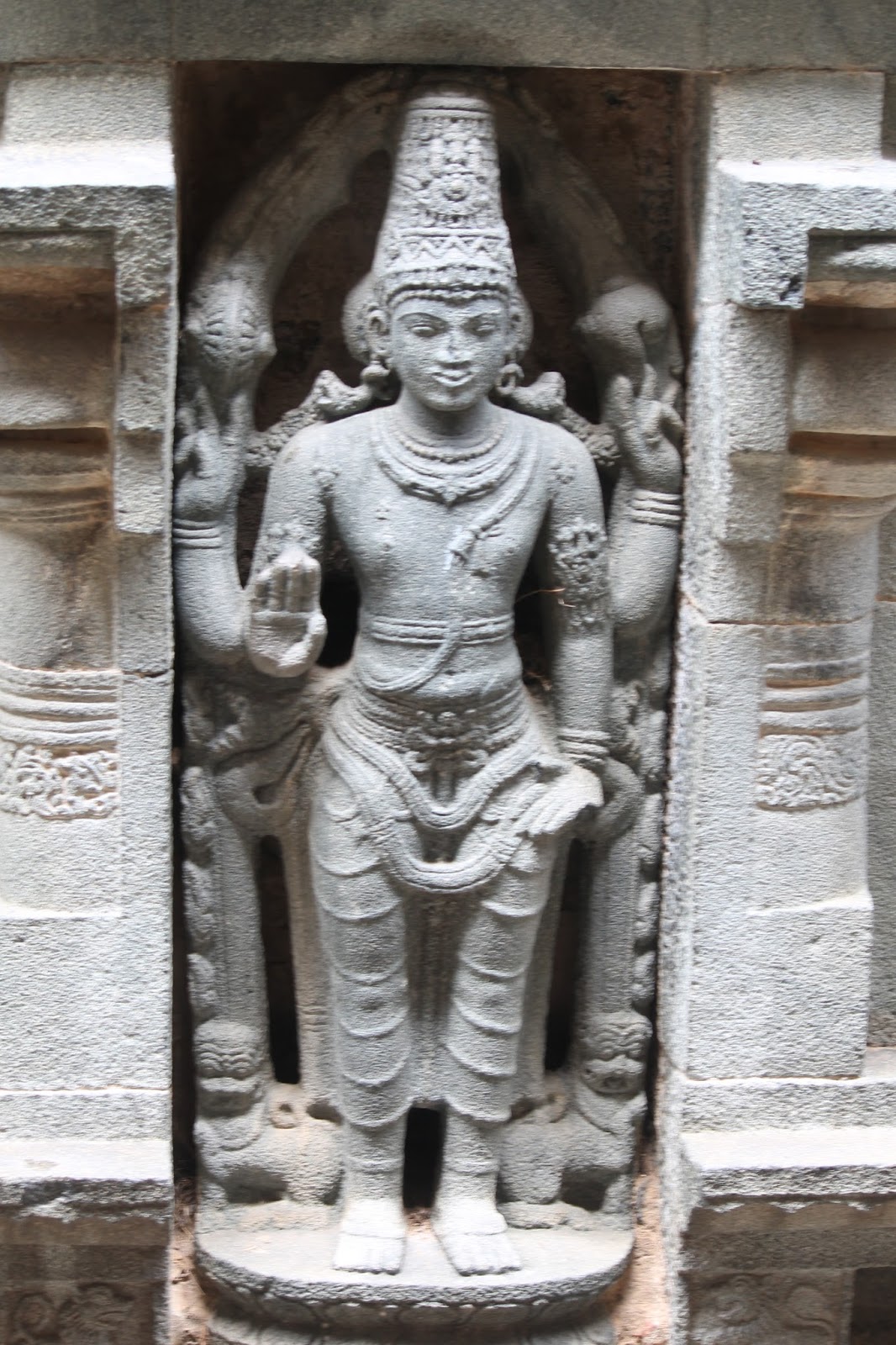
Choleeswarar Temple, Melpadi, Vellore

Choleeswarar Temple, Melpadi, Vellore
Choleeswarar Temple is the tomb shrine of Arinjaya Chola, was built over the mortal remains of Arinjaya Chola (AD 956 – 967), who died in a war at Arur near Thakkolam by his grandson Chola Rajaraja I in the year AD 1014. This Temple is located in Melpadi Village near Vallimalai in Vellore District of Tamilnadu and is situated just opposite the Somnatheshwarar temple across the road. This Temple is being maintained by Archeological Society of India.


History
Melpadi is close to the shore of the Pennar river and was the border between Chola and Rashtrakuta kingdoms. There are two Chola period temples found in this town, Somanadheeswarar temple and Choleeswarar temple. Somanadheeswarar temple is bigger in size and has many interesting architectural features. Choleeswarar temple is a Palli Padai Temple (Tomb Temple.


The temples are being maintained by Archeological Society of India. During the Chola period, the town was called as Rajasrayapuram (named after a surname of Rajaraja Chola I). In 959 CE, the Rashtrakuta King Krishna III encamped in this town (as per the Karhad plates). This town acted as a garrison to guard the Chola lands from the attack of the Chalukyas and the Rashtrakutas.


Three stone inscriptions dating the 29th year of the reign of Rajaraja Chola I and one inscription of the 9th year of the reign of Rajendra Chola I are found in this temple. As per the inscriptions, the temple was originally called Arinjigai Ishwara or Arinjishwara. This temple is a Palli Padai temple. Rajaraja built the Palli Padai temple for his own grandfather, Arinjaya Chola. The Temple is built atop the samadhi of the Chola emperor.
The Temple
Choleeswarar temple, the tomb shrine of Arinjaya Chola was built over the mortal remains of Arinjaya Chola (AD 956 – 967), who died in a war at Arur near Thakkolam by his grandson Chola Rajaraja I in the year AD 1014. This Temple is located in the opposite direction of Somanadheeswarar temple. This is comparatively a small temple. This east facing Cholesvara Temple aka Arinjigai Isvaram complex is located on the river bank of Ponnai at the out skirts of the village Melpadi and surrounded by the green paddy fields and shady trees.


The temple complex is well maintained and protected within Archaeological Survey of India (ASI) fence. The granite temple structure does not show any complex plan and the temple never enlarged by royal successors. The architectural elements 'reflect Chola convention.’ This whole granite structure stands within the rectangular compound defined by granite perimeter walls. The Vesara vimana of the main sanctum is small and typically square and includes sanctum (garbhagriha) Ardhamandapam and mukhamandapam.


From upana to stupi, the vimana is built with green tinged granite stone. Shivalingam (3 - 4 feet tall) is present in a 10 sq. ft sanctum sanctorum. There is an Ardhamandapam before the sanctum. The external vimana walls are divided into segments and the segmenting is marked by pilasters.  The plain outer walls of this particular vimana have brahmakanta pilasters (four sided) and plain Karnapathis. Although there is a slight projection of the sala-koshtas, there is almost no depth to house the deities. It appears that the sala-koshta deities might be later additions.


The vimana has the very austere basement (adhishtana) of padabandha type with the components of upa-peeta, upana, jagadi, tri-patta kumuda moulding. There is an arrangement of friezes of bas-relief lion at the kodungai. The external wall surface is divided by pilasters in to well-shaped ornate niches with makara torana. The sculptures in the niches include Dhakshinamoorthi, Vishnu, Brahma and Durga and these could be later additions.


On both sides of the entrance to the main sanctum, there are two tall, robust Dwarapalakas standing facing each other. Both the Dwarapalakas are best examples of Early Chola sculptures, demonstrating the mastery of the Chola sculptors. Makara Toranas are seen over each of the niche images (around the external walls of the sanctum), with Saint Kannappa Nayanar in the toranam over the niche without deity, Bhikshatana accompanied by two Rishi-patnis in the toranam over Dhakshinamoorthi, Krishna in the toranam over Vishnu and the King (Rajaraja I) worshiping Shivalinga (Arinjaya) in the toranam over Brahmma.


There are many inscriptions all over the sanctum wall. The inscriptions are mainly about donations made in the form of ewe to supply ghee to burn the perpetual lamp in the temple till moon and sun endure, Rajaraja’s meikeerthi, the boundaries of the land given for construction of the temple, watering to Iluppai field (from the seeds oil is extracted to burn the lamps). From the inscriptions the place Melpadi belongs to Tunadu, a subdivision of Perumbanapadi in a district of Jayamkonda Chola Mandalam. The ancient name of the Melpadi is mentioned as Rajasrayapuram and the Choleeswarar Temple was called as ArinjigaiIswara or Arinjiswara.
Connectivity
This Temple is located in the opposite direction of Somanadheeswarar temple. The Temple is located at about 750 meters from Melpadi Bus Stop, 7 Kms from Vallimalai, 8 Kms from Ponnai, 12 Kms form Thiruvalam, 22 Kms from Katpadi, 17 Kms from Ranipet, 21 Kms from Arcot, 30 Kms from Vellore and 143 Kms from Chennai.  This temple is situated on the way to Vallimalai on the Tiruvallam – Ponnai Road.
The temple is about 17 Kms from Ranipet on the Chittoor Road. A little before Ponnai a bridge across the River Bahuda cuts off on the left to reach Melpadi. The temple is just after the bridge on the right of the road. On the left is a small temple to Lord Choleeswarar, also in ASI control. Nearest Railway Stations are located at Thiruvalam (13 Kms), Mukundarayapuram (13 Kms), Bommasamudram (20 Kms) and Katpadi (23 Kms). Nearest Airport is located at Chennai (120 Kms).

Somnatheshwarar Temple, Melpadi, Vellore

Somnatheshwarar Temple, Melpadi, Vellore
Somnatheshwarar Temple is a Hindu Temple dedicated to Lord Shiva located at Melpadi Village in Vellore District of Tamilnadu. Melpadi is a small village on the Thiruvalam – Ponnai road. It is assumed that the temple was built by Parantaka Chola I between 907 and 953 A.D. and later developed by Rajaraja Cholan (985-1014 A.D.). This Temple is being maintained by Archeological Society of India.


History
Melpadi is close to the shore of the Pennar river and was the border between Chola and Rashtrakuta kingdoms. There are two Chola period temples found in this town, Somanadheeswarar temple and Choleeswarar temple. Somanadheeswarar temple is bigger in size and has many interesting architectural features. Choleeswarar temple is a Palli Padai Temple (Tomb Temple.
The temples are being maintained by Archeological Society of India. During the Chola period, the town was called as Rajasrayapuram (named after a surname of Rajaraja Chola I). In 959 CE, the Rashtrakuta King Krishna III encamped in this town (as per the Karhad plates). This town acted as a garrison to guard the Chola lands from the attack of the Chalukyas and the Rashtrakutas.
On the south wall of the sanctum, the inscription dated in the 14th year of the reign of Rajaraja Chola I is found. It talks about the conquest of Kudamali region and Pandyas. It also mentions about the Chola officer named Irayairavan Pallavayan, who served under Rajaraja. It is assumed that the temple was built by Parantaka Chola I between 907 and 953 A.D. and later developed by Rajaraja Cholan (985-1014 A.D.).
The Temple
For brief details, please refer below link;
Temple Opening Time
This temple is open only till 6 P.M. in the evening. Ideal time for visiting this temple would be after 5 PM.
Connectivity
The Temple is located at about 750 meters from Melpadi Bus Stop, 7 Kms from Vallimalai, 8 Kms from Ponnai, 12 Kms form Thiruvalam, 22 Kms from Katpadi, 17 Kms from Ranipet, 21 Kms from Arcot, 30 Kms from Vellore and 143 Kms from Chennai.  This temple is situated on the way to Vallimalai on the Tiruvallam – Ponnai Road. The temple is about 17 Kms from Ranipet on the Chittoor Road. A little before Ponnai a bridge across the River Bahuda cuts off on the left to reach Melpadi. The temple is just after the bridge on the right of the road. On the left is a small temple to Lord Choleeswarar, also in ASI control. Nearest Railway Stations are located at Thiruvalam (13 Kms), Mukundarayapuram (13 Kms), Bommasamudram (20 Kms) and Katpadi (23 Kms). Nearest Airport is located at Chennai (120 Kms).

Somnatheshwarar Temple, Melpadi – The Temple

Somantheshwarar Temple, Melpadi – The Temple
The temple has south facing entrance. The outer entrance does not have tower. The inner entrance has a three-tiered tower, which is a later addition. The entire temple complex is surrounded by wide fortress walls. This is a Chola period temple built by Parantaka Chola I between 907 and 953 A.D. and later developed by Rajaraja Cholan (985-1014 A.D.). Presiding Diety is called as Somnatheshwarar. The sanctum faces the east direction and it enshrines a big sized Shiva Linga, Presiding Deity.


The vimana is made of stone completely, which is a notable feature. Sanctum Vimanam is of stone dome type and the kalasam is also made of stone. The dome and the kalasam are dark black/ green colour stones. Two huge figures of Dwarapalas at the entrance of the sanctum are very attractive. The flagstaff, bali peetha and Nandi are found facing towards the direction of the sanctum, but they are separate by the wall from the sanctum.


The Mukha Mandapam has the beautiful vratta sthamba (round pillars). Ganesha, Dhakshinamoorthi, Vishnu, Brahma and Vishnu Durga are found as the niche images. They all look very attractive and do not belong to the original Chola period. They appear to be later additions. Mother is called as Tapaskruta Devi. The Goddess Tapaskruta Devi is found in a separate south facing shrine located in the outer prakara. The shrine has an attractive vimana and a mukha mandapam. This is a later addition probably done by the Vijayanagara Kings.


The Chola period Kalyana Mandapam as well as few other mandapams that are found in the temple have beautiful sculptures depicted on the pillars. There are few small sized attractive and interesting bas relief images on the outer wall of the temple. The south eastern mandapam has many sculptures that include Ganesha, Sapta Matrikas, Veerabhadra, Naga Yagnopavita Vinayaka, Kankalanathar, Gangadhara, Rishbhantika Murti, Bhairava, Surya, Chandra, Nagas and Ayyanar. Some of them belong to the Chola period and the others to the later period.


The southern outer wall in the second prakara has a small shrine of Ganesha. Outside the temple complex, there is a soldier's sculpture found. He holds spear and shield in his arms. There is a big stone bowl and a Shiva Lingam (Avudayar in broken condition). As per the inscription found in this temple which belongs to the period of Rajaraja Chola I, the presiding deity was called as Cholendra Simhesvara in those days. There are lot of inscriptions around sanctum wall. 

Ellaiamman Temple, Vettuvanam, Vellore

Ellaiamman Temple, Vettuvanam, Vellore
Ellaiamman Temple is a Hindu Temple dedicated to Goddess Renukadevi located at Vettuvanam in Vellore District of Tamilnadu. This Temple is considered as one of the Sakthi Peetams. This has a legend connection with the Renuka Devi Amman temple at Padavedu and Gangai Amman temple at Gudiyatham. The Temple is situated on the slopes of Javadhu Hills and on the banks of River Palar. It is said that Ellaiamman of Vettuvanam and Padavedu Ellaiamman are the same. Melaivithur and Vithagapuri are the other names of Vettuvanam.


Legends
This place has an important legend behind. This is the place where Renuka Devi's head was cut off by Parasurama at the behest of his father Sage Jamathgini. Padavedu Renugambal is very popular but this is the place the actual incident took place. Lord Siva and Goddess Parvathi Devi incarnated as the great Saint Jamathgini and his wife Renukadevi and lived on this world. Visu, Viswas, Viswarupan, Paranjothi and Parasuraman were their five sons. Parasurama was their last son.


It was a daily duty for Renukadevi to make a pot out of fresh mud and fetch water for Saint Jamadhgani's Pooja. One day, she saw the reflection of a Kantharva in the water. She stood mesmerized by his beauty for a split of a second. The mud pot dissolved in the river. She tried again and again but in vain. She realized her mistake and told her husband that an animal chased her and so she couldn’t bring water. But the saint who guessed the real happenings, called out for his first four sons and asked them to cut off their mother's head.


They all refused and saint cursed them and called his last son Parasurama to do the duty. Parasurama asked for two boons from his Father and he obliged. He chased her mother who ran for life and she hid behind a Arundhati girl, who was cutting woods and begged for mercy. Parasurama warned the girl, but she did not oblige. In the heights of anger Parasurama chopped both heads together. In great distress, he took the heads to his father. According to his granted boons. he brought his brother and mother back to life.


But in confusion, he fixed his mother’s head on the Arundhati girl body. Henceforth the deity was named Mariamman and the place was called as Vettuvanam. A farmer who cultivated the land accidentally dropped the spade on the deity. Blood poured out like a river. A divine voice from the sky said, " I am Ellaiamman" and a temple was constructed in the place. Though the time and year cannot be judged precisely, it said that in 1961, this temple was one among the 2500 temples in Tamil Nadu.


History
This temple was newly constructed after demolishing the old temple by Sivarasu Venkatraman Family (Katpadi & London) and the work completed in 2008 (Kumbabishekam done on 3rd Dec 2008)
·        Year 1981 - Compound wall was constructed.
·        Year 1972 - Mandapam was constructed.
·        Year 1973 - Snake Goddess Mandapam was constructed.
·        Year 1984-1988 - Kumbabishekam was performed.
·        Year 2003 - Kumbabishekam was performed again.
The Temple
Raja Gopuram is east facing. It has Seven Kalasam on top. Historical happenings of this temple are depicted as statue on the main gopuram. Epics like Ramayana, Saivapuranam are depicted in a simple but beautiful manner. There is an another smaller Gopuram and it has three Kalasas. Presiding Deity Ellaiamman is facing the east.


There is a big mandapam of a seating capacity of 100 persons. Utsava statue of Goddess is situated there. To its right the snake Goddess is situated. The five-headed snake Goddess grants all the wishes of the devotees. Mostly all the deities in this temple are east facing but some are west facing.


Neem is considered the devotional tree of this place. It is 100 years old. Devotees suffering from small pox, Measles used to rub the paste Neem leaf and turmeric on their whole day. There is a well in the premises that never gets dry in the toughest of the summers. People believe that the water has miraculous properties.


A pond is situated just opposite to the temple. Strong stone steps are bordering the pond on all four sides. These are more secured by strong iron gates on all four sides. Every year Float festival has been celebrated for three days. Devotees from nearby and far off places visit the temple on these days and enjoy the dreaded diseases disappear while you bath in the pond.


Pooja Details
Here Poojas are performed under Kamika Agamam method. There are two Poojas conducted here. They are;
1.    Kalasanthi Pooja
2.    Sayaraksha Pooja
Festivals
10 days Adi Peruvizha includes Car Procession, Daily Vahana procession, Theppam, Laksha Deepam is the most famous festival celebrated here. Navarathri, Deepavali, Pongal, English New Year and Tamil New Year are the other festivals celebrated here with much fanfare.
Prayers
It is said that childless couples tie circles of threads with the wish of a baby. Unmarried devotees tie the sacred yellow thread around the tree and wish for suitable life partners.
Contact
Ellaiamman Temple
Vettuvanam, Pallikonda - Via
Vellore District – 635 809
Phone: +91 4171 240200
Connectivity
The Temple is located at about 3 Kms from Pallikonda, 2 Kms from Pallikonda Bus Stop, 7 Kms from Melalathur, 12 Kms from Gudiyattam, 27 Kms from Ambur, 45 Kms from Vaniyambadi and 25 Kms from Vellore. The Temple is situated on Chennai – Bangalore Highways. Nearest Railway Stations are located at Melalathur (8 Kms) and Gudiyatham (7 Kms). Nearest Airport is located at Chennai (151 Kms).
Location

Naganatheswarar Temple, Vilapakkam, Vellore

Naganatheswarar Temple, Vilapakkam, Vellore
Naganatheswarar Temple is a Hindu Temple dedicated to Lord Shiva located at Vilapakkam in Vellore District of Tamilnadu. The Temple is located at about 500 meters from Vilapakkam Bus Stop, 7.5 Kms from Arcot, 11 Kms from Ranipet, 13 Kms from Walajah and 30 Kms from Vellore. Nearest Railway Station is located at Ranipet (11 Kms) and Nearest Airport is located at Chennai (111 Kms).
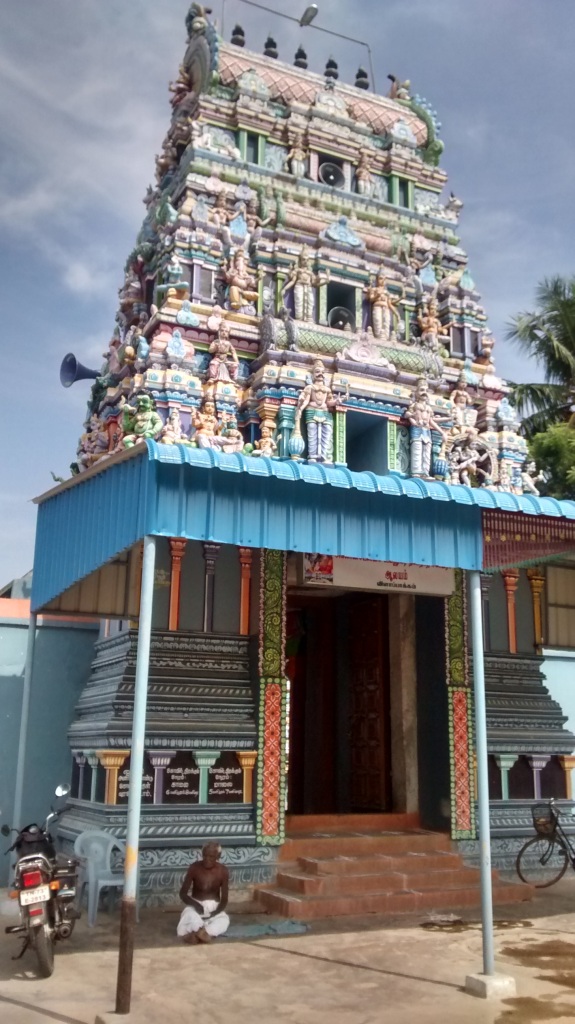
Kasi Viswanathar Temple, Walajapet, Vellore

Kasi Viswanathar Temple, Walajapet, Vellore
Kasi Viswanathar Temple is a Hindu Temple dedicated to Lord Shiva located at Walajapet Town in Vellore District of Tamilnadu. The Temple is believed be over 500 years, though locals claim a much older origin. The Temple is east facing with a 5-tier entrance Rajagopuram at south. Presiding Deity is called as Kasi Viswanathar and is facing east. Mother is called as Visalakshi and is facing south.
Shrines of Navagrahas, Nalwar, Ganesha, Dakshinamurthy, Vishnu, Brahma, Durga, Chandikeswara, Vinayaka, Naganathar and Muruga with consorts can be found in the inner prakaram. By visiting this temple, one can get rid of fear of death. Kala Bairavar and Sani are opposite to each other and this is a Sani Dosha Nivarthi Sthalam.
The temple is situated inside Walajah town after the Bus Stand Junction. The Temple is located at about 500 meters from Walajapet Bus Stand, 3 Kms from Ranipet, 4 Kms from Ranipet Railway Station, 6 Kms from Arcot, 12 Kms from Kaveripakkam, 29 Kms from Vellore, 109 Kms from Chennai and 98 Kms from Chennai Airport. Nearest Railway Station is located at Ranipet and Nearest Airport is located at Chennai.
Location

References