Saturday, March 9, 2019

Adhirangam Ranganatha Swamy Temple, Adhi Thiruvarangam – The Temple

Adhirangam Ranganatha Swamy Temple, Adhi Thiruvarangam – The Temple
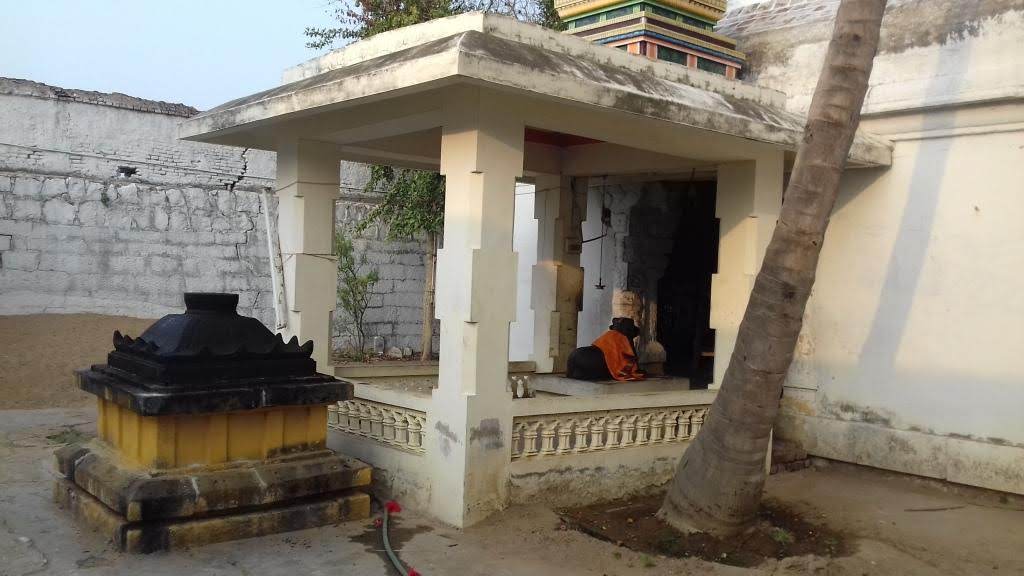
The temple is facing east with an entrance arch with stucco image of Sri Ranganathar in Sayana Kolam. The entrance arch is followed by a 4 pillared mandapam and a three-tiered gateway tower. The Temple is surrounded by tall granite walls. The temple covers an area of 2 acres (8,100 m2) and has two precincts. The sanctum sanctorum consists of Sanctum, Antarala, Arthamandapam and Mahamandapam. Balipeedam and Dwajasthambam can be found in the Mahamandapam.
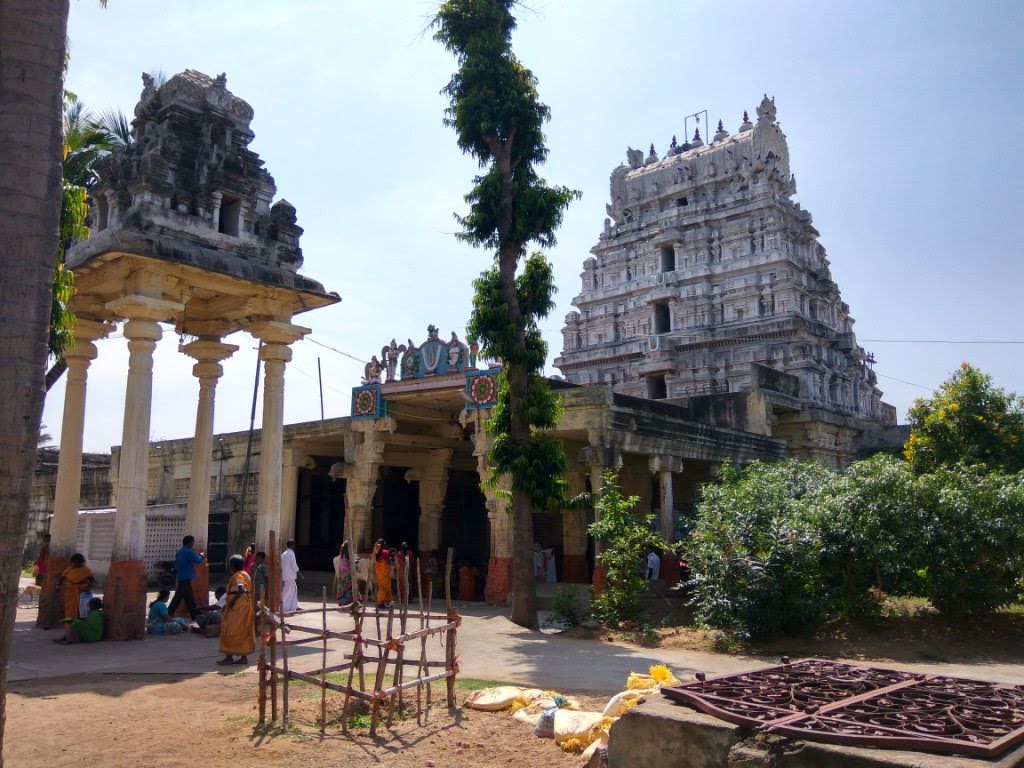

Presiding Deity is called as Ranganatha Swamy. The presiding deity is an imposing image measuring 29 ft (8.8 m) made of mooligai silai (idol made with herbs) and is seen in reclining posture from in the sanctum. He is lying in a sleeping posture from South to North facing east. The five headed snake Adisesha is sported as an umbrella for the presiding deity made of stucco. The sanctum also houses the image of Sridevi near his head and Bhudevi near his foot.


The festival deity, Rangarajan along with his consorts Sridevi and Bhudevi are also housed in the sanctum. There is a mace made of silver located near the arm and the image of Garuda seen in praying posture is located near the foot of the presiding deity. The sanctum is of rectangular shape to accommodate the gigantic Ranganathar. The images of Azhwars and Chota Ranganathar are housed in the Artha Mandapam preceding the sanctum. The entry to the sanctum is from the south.


The central shrine is approached from the gopuram axially through a four pillared mani mandapam and pillared halls of mukha mandapam and artha mandapam. Mother is called as Ranganayaki and she is also facing east. The shrine of Ranganayaki, the consort of Ranganathar, is located parallel to the sanctum (i.e. right side). The Goddess is in standing posture. She is about 3 feet high.  The shrine of Ranganayaki has sculpted pillars made in Vijayanagara style.


There are shrines of Kodandarama, Hanuman, Varadaraja Perumal, Vishwakasena, Andal and Krishna around the sanctum. There is a huge foot of Vishnu is seen around the western side in the first precinct. There is a stone idol of Lord Rama can be found on the south west corner of the courtyard. Various sounds are produced while tapping different parts of the statue.


The temple has a historical grain storage container made of brick located in the south east corner of the temple immediately after the entrance arch on the right-side corner. The granary is one of its kind as in other temples like Srirangam, Palaivananathar Temple at Papanasam and Jambukeswarar Temple at Tiruvanaikaval. It is believed that famers in the region store their grains in the temple, which also accommodates contributions of the donors to the temple. Sthala Vriksham is Punnaga Tree and Theerthams associated with this Temples are Then Pennai River and Chandra Pushkarani.


Thiripuranathar Temple, Thenmalai, Thirunelveli

Thiripuranathar Temple, Thenmalai, Thirunelveli
Thiripuranathar Temple is a Hindu Temple dedicated to Lord Shiva located at Thenmalai Village in Vasudevanallur Taluk in Thirunelveli District of Tamilnadu. Presiding Deity is called as Thiripuranathar and Mother is called as Sivaparipoorani. The Temple is considered equivalent to Kalahasthi Temple. The Temple is famous for Sarpa Pariharam. People in Thenmalai and nearby villages used to keep the name of Lord for their first-born children. The Temple is maintained by Sivagiri Jamin.


This is one of the Pancha Bootha Sthalams around Sankarankoil. Pancha Bhoota Sthalam refers to five temples dedicated to Shiva, each representing a manifestation of the five prime elements of nature: land, water, air, sky, and fire. Pancha indicates "five," Bhoota means "elements," and Stala means "place." The temples are located around Sankarankoil in Tamilnadu. The five elements are believed to be enshrined in the five lingams of the temples, with each lingam named based on the element represented. This Sthalam is called as Vayu Sthalam (Air Element).
Pancha Bootha Sthalams around Sankarankoil are;
1. Sankara Narayanan Temple, Sankarankovil, Thirunelveli (Land Element)
2. Nachadai Thavirthu Aruliya Nathar Temple, Devadanam, Virudhunagar (Sky Element)
3. Mathiyasthanathar Temple, Dharugapuram, Thirunelveli (Water Element)
4. Thiripuranathar Temple, Thenmalai, Thirunelveli (Air Element)
5. Palvanna Nathar Temple, Karivalamvandanallur, Thirunelveli (Fire Element)
The Temple
The Temple is west facing. Presiding Deity is called as Thiripuranathar and Mother is called as Sivaparipoorani. There is no window in the Sanctum. But the Lamps in the sanctum will glow brightly one time and suddenly it will become dim as if air is disturbing. People believe that this rare occurrence is happening of Lord Shiva’s breath. The Main entrance is facing the Mother shrine. But devotees should worship Thiripuranathar and then only should worship Mother. Sthala Vriksham is Vilva Tree.


Festivals
Pournami Girivalam around the Temple is very famous here. All Shiva related festivals are celebrated here.
Connectivity
The Temple is located at about 9 Kms from Sivagiri, 11 Kms from Karivalam Vanda Nallur, 14 Kms from Devathanam, 19 Kms from Dharugapuram, 22 Kms from Sankarankovil, 22 Kms from Sankarankovil Railway Station, 31 Kms from Rajapalayam, 55 Kms from Tenkasi, 86 Kms from Tirunelveli and 173 Kms from Thiruvananthapuram Airport. The Temple is situated in Rajapalayam to Tenkasi Route. People coming from Rajapalayam should take a left turn at Sivagiri and the Temple can be reached at about 9 Kms. Regular buses are available from Rajapalayam to this Village.

Palvanna Nathar Temple, Karivalamvandanallur, Thirunelveli

Palvanna Nathar Temple, Karivalamvandanallur, Thirunelveli
Palvanna Nathar Temple is a Hindu Temple dedicated to Lord Shiva located at Karivalamvandanallur Village in Sankarankovil Taluk in Thirunelveli District of Tamilnadu. Presiding Deity is called as Palvanna Nathar / Thirukala Eesar / Mugalingar and Mother is called as Oppanaiammal. The Temple is considered equivalent to Thiruvannamalai Annamalaiyar Temple. The Temple is also considered as Shukra Parihara Sthalam.


This is one of the Pancha Bootha Sthalams around Sankarankoil. Pancha Bhoota Sthalam refers to five temples dedicated to Shiva, each representing a manifestation of the five prime elements of nature: land, water, air, sky, and fire. Pancha indicates "five," Bhoota means "elements," and Stala means "place." The temples are located around Sankarankoil in Tamilnadu. The five elements are believed to be enshrined in the five lingams of the temples, with each lingam named based on the element represented. This Sthalam is called as Agni Sthalam (Fire Element).
Pancha Bootha Sthalams around Sankarankoil are;
1. Sankara Narayanan Temple, Sankarankovil, Thirunelveli (Land Element)
2. Nachadai Thavirthu Aruliya Nathar Temple, Devadanam, Virudhunagar (Sky Element)
3. Mathiyasthanathar Temple, Dharugapuram, Thirunelveli (Water Element)
4. Thiripuranathar Temple, Thenmalai, Thirunelveli (Air Element)
5. Palvanna Nathar Temple, Karivalamvandanallur, Thirunelveli (Fire Element)
Legends
For brief details, please refer below link;
The Temple
This is an east facing temple with nine tiered Rajagopuram. Presiding Deity is called as Palvanna Nathar / Thirukala Eesar / Mugalingar. Lord Shiva is housed in the sanctum in the form of Spadika Lingam. Mother is called as Oppanaiammal. She is housed in a separate shrine and she is facing south. Lingam worshipped Lord Lakshmana can be found in the Temple premises in the name of Lakshmaneswarar. Lakshmaneswarar can be found along with his consort Komalambigai.


There are shrines for Sowbagya Ganapathy, Dhandapani, Shanmugam, Adhikara Nandeeswarar, Suryan, Chandran, Agasthya, Kasi Viswanathar with his consort Visalakshi, Juradevar, Kandhuri Amman, Saptha Mathas, Siddhi Vinayagar, Pancha Lingas, Lakshmi, Brahma, Saneeswarar, Natarajar and Lakshmana in the Temple premises.


The Mandapam in front of Rajagopuram was built by Pulidevan. The Northern Prakaram and Eastern Mandapam was built by Arunachalam Chettiyar in 1928 AD. He also done Kumbabishekam for this Temple. An Idol of Arunachalam Chettiyar can be found at the entrance of the Temple. Sthala Vriksham is Kala Tree. Theerthams associated with this Temple are Shukra Theertham and Nitcheba Nathi.
Temple Opening Time
The Temple remains open from 06.00 AM to 12.00 Noon and 04.00 Pm to 08.00 PM.
Singers
Varagunarama Pandyan had sung Pathu Pattu Anthathi, Venba Anthathi, Kalithurai Anthathi on Lord Shiva of this Temple. He had sung around 300 Anthathi songs. Shaivites refer his collections as mini Tiruvasagam.
Prayers
People pray to Lord here for Child Boon and to get relief from marriage obstacles.
Festivals
Avani Thapasu similar to Sankaran Kovil Thapasu is celebrated here with much fanfare.
Connectivity
The Temple is located at about 9 Kms from Thenmalai, 11 Kms from Sankarankovil, 12 Kms from Sankarankoil Main Bus Stand, 12 Kms from Sankarankoil Railway Station, 25 Kms from Rajapalayam, 25 Kms from Devathanam, 19 Kms from Dharugapuram, 54 Kms from Tenkasi, 75 Kms from Tirunelveli and 172 Kms from Thiruvananthapuram Airport. The Temple is situated on Rajapalayam to Sankarankovil Route.

Palvanna Nathar Temple, Karivalamvandanallur – Legends

Palvanna Nathar Temple, Karivalamvandanallur – Legends
Kari Valamvanda Nallur:
As per legend, when Kulasekara Pandyan went for hunting expedition, he chased an elephant, it went inside the Shiva temple and circumbulated Shiva Linga hidden in bushes. Suddenly, elephant got transformed Bhooda Gana (Attendants of Lord Shiva). Since elephant circumbulated Lord Shiva of this Temple, the place came to be called as Kari (Elephant) Valam Vantha (Circumbulation) Nallur (Place).
Lord Shiva performed last rites to Pandya King here:
As per Myth, a king called Varagunarama Pandiyan was ruling over this place. He had no sons. Lord Shiva appeared in the dreams of the worried King and informed him that Lord himself will do the last rites for the King. When King died, there were no persons to do the last rites. At that time, Lord Shiva in form of Old Brahmin appeared and performed the last rites for the King. Lord Shiva performed last rites to humans only in two places. One was Thiruvannamalai where Lord Shiva performed last rites to Vallala Maharaja. The Other was Karivalamvandanallur where Lord Shiva performed last rites to Varagunarama Pandiyan.
Lakshmaneswarar:
Lakshmana got Brahma Hatti Dosha for killing Indrajit, son of Ravana. To get rid of this sin, Lakshmana came here and consecrated the Linga. He worshipped Lord Shiva and got his relief from his sin. Lingam worshipped Lord Lakshmana can be found in the Temple premises in the name of Lakshmaneswarar.
Devas Indran and Jayanthan got relieved of their curse here:
Devas Indran and Jayanthan got curse to became Hunters and born in earth. They were called as Kari and Sathan. They worshipped Lord Palvannanathar and got relief from their curse.
Parasakthi Peedam:
It was believed that Sage Agasthya formed Parasakthi Peedam on three places namely; Kutralam, Vedaranyam and Karivalamvandanallur.
People worshipped Lord Shiva here:
It was believed that Vishnu, Brahma, Agasthya, Devas, Narada and Vasishta worshipped Lord Shiva here.
Lord Shiva performed his Nithya Thandava here:
It was believed that Lord Shiva performed his Nithya Thandava in this place.

Mathiyasthanathar Temple, Dharugapuram, Thirunelveli

Mathiyasthanathar Temple, Dharugapuram, Thirunelveli
Mathiyasthanathar Temple is a Hindu Temple dedicated to Lord Shiva located at Dharugapuram Village in Vasudevanallur Taluk in Thirunelveli District of Tamilnadu. Presiding Deity is called as Mathiyasthanathar / Pinakkarutha Peruman and Mother is called as Akilandeswari. The Temple is equivalent to Thiruvanaikaval Jambukeswarar Temple. The Temple is believed to be 1500 years old. The Temple is considered to be Guru Parihara Sthalam.


This is one of the Pancha Bootha Sthalams around Sankarankoil. Pancha Bhoota Sthalam refers to five temples dedicated to Shiva, each representing a manifestation of the five prime elements of nature: land, water, air, sky, and fire. Pancha indicates "five," Bhoota means "elements," and Stala means "place." The temples are located around Sankarankoil in Tamilnadu. The five elements are believed to be enshrined in the five lingams of the temples, with each lingam named based on the element represented. This Sthalam is called as Neer Sthalam (Water Element).
Pancha Bootha Sthalams around Sankarankoil are;
1. Sankara Narayanan Temple, Sankarankovil, Thirunelveli (Land Element)
2. Nachadai Thavirthu Aruliya Nathar Temple, Devadanam, Virudhunagar (Sky Element)
3. Mathiyasthanathar Temple, Dharugapuram, Thirunelveli (Water Element)
4. Thiripuranathar Temple, Thenmalai, Thirunelveli (Air Element)
5. Palvanna Nathar Temple, Karivalamvandanallur, Thirunelveli (Fire Element)
Legends
Mathiyasthanathar:
Cheras, Cholas and Pandyas fought each other continuously for the control of Tamil lands. Lord Shiva decided to put an end to this fight. He came in the form of sage Agasthya settled the disputes between the Kings by demarking the boundaries of their respective country. Thus, the problem between the three crowned Kings got solved. Since Lord Shiva settled the disputes between the Kings, he came to be known as Mathiyasthanathar / Pinakkarutha Peruman.
Tharukapuram:
It is believed that an Asura named Tharukan visited and prayed to Lord Shiva to get relief from a curse. Hence this place was called as Tharukapuram.
People performed penance here:
Sages Gouthama, Sanakathi, Vasishta and Valmiki performed penance here.
History
The Temple is believed to be 1500 years old. The place was developed into a city at about 500 years ago. The Temple was dilapidated completely few centuries back. Later Maanapura Pandyan reconsecrated the Temple to its current state. The Temple is traditionally being maintained Thalaivan Kottai Zamindars.


The Temple
Presiding Deity is called as Mathiyasthanathar / Pinakkarutha Peruman. There was a spring in the sanctum. Sacred ablutions are done to the Lord with the water from this spring. Since same water cannot be used for ablutions continuously as per Hindu scriptures, the spring was closed permanently by putting stone slabs. Devotees can see moistures in the sanctum walls even now. Mother is called as Akilandeswari. There is a shrine for Bhairavar in the Temple premises. He is called as Agni Bhairavar. People pray to him to get rid of black magics.


The temple also consists of a Grand Natarajar Shrine and a Siddhar's Samadhi. Special mention to be made on the Dhakshinamoorthy here. Dhakshinamoorthy is sitting above all Navagrahas, in a peetam. It is like Dakshinamoorthy is teaching the Navagrahas. This kind of arrangement can be found only in this Temple in entire world. Sthala Vriksham is Mango tree. Two Kaala Poojas are conducted in this Temple.


Prayers
To get rid of Guru Dosham, Devotees have to come to this Temple to worship Dakshinamoorthy for three consecutive Thursdays. They have to worship the Lord Dakshinamoorthy during Guru Hora Time (i.e. from 4.30 PM to 6.00 PM). Devotees has to offer Yellow color dresses to Dakshinamoorthy and keep their horoscopes at the feet of the Lord. Then devotees have to worship Lord and perform poojas. By doing so, they can get rid of all Doshams related to Guru.
Connectivity
The Temple is located at about 5 Kms from Vasudevanallur, 5 Kms from Vasudevanallur Bus Stand, 8 Kms from Chinthamani Bus Stand, 10 Kms from Puliyangudi, 23 Kms from Devathanam, 19 Kms from Thenmalai, 20 Kms from Karivalam Vanda Nallur, 24 Kms from Dharugapuram, 14 Kms from Sankarankovil Railway Station, 15 Kms from Sankarankovil, 40 Kms from Rajapalayam, 38 Kms from Tenkasi, 79 Kms from Tirunelveli and 145 Kms from Thiruvananthapuram Airport. The Temple is situated on Rajapalayam to Tenkasi Route.
Location