Monday, November 29, 2021

Malaiya Kovil Temple Complex – History

Malaiya Kovil Temple Complex – History

Malaiya Kovil is considered as the defacto border between Chola and Pandyan Kingdom. It is said that the southern cave temple is facing towards Chola country (west) as it was built by the Cholas and the eastern cave temple is facing towards Pandyan country (east) as it was built by the Pandyas. There are about three inscriptions in the southern rock cut cave temple.

The earliest inscription is dated to the 10th regnal year of Kulothunga Chola II (1143 CE) records a sale deed. The Village was mentioned as Kulamangalam and the presiding deity as Thiruvokalisvaramudaiya Nayanar in the inscription. The inscription on the western wall of the maha mandapa belongs to 18th Century CE records an endowment made to the deity. The Village was mentioned as Navalur and the presiding deity as Kaliswaramudya Nayanar in the inscription.

The other inscription on the western pillar is illegible. There is an inscription written in grantha script can be seen on the southern side of the eastern cave temple. It mentions about a musical instrument Veena named Parivathini. An inscription of Kulasekara Pandya can be seen on the door steps of the eastern cave temple.

Lord Shiva was called as Srivaramudaiya Nayanar in the inscription. The hill temple was built by a native of Nachandupatti towards the close of the 19th century as per the inscription near the flight of steps. The Temple was called as Malayil Kovil (Temple in the hill) in ancient times. Now, it got corrupted to Malaiya Kovil. Malaiya Kovil was also called as Orukkombu Malai. Kurinchi Kotha Naaval Kurichi, Thirunavalangiri, Thiruvothikkaal in ancient times.

Malaiya Kovil Temple Complex – The Temple Complex

Malaiya Kovil Temple Complex – The Temple Complex

The temple complex mainly consists of two temple groups namely Hill Temples (Mela Kovil) and Foot Hill Temples (Keezha Kovil). The Foot Hill Temples are dedicated to Lord Shiva while the hill temples is dedicated to Murugan. The hillock is oblong in shape and measures 40 metres in the north south direction, 80 metres in the east west direction.


Hill Temples (Mela Kovil):

For brief details, please refer below link;

https://tamilnadu-favtourism.blogspot.com/2021/11/malaiya-kovil-temple-complex-hill-temples.html

Foot Hill Temples (Keezha Kovil):

For brief details, please refer below link;

https://tamilnadu-favtourism.blogspot.com/2021/11/malaiya-kovil-temple-complex-foot-hill-temples.html

Temple Tank:

There is a temple tank situated between the two rock cut shrines. This tank is massive with steps on all its four sides.

Malaiya Kovil Temple Complex – Hill Temples (Mela Kovil)

Malaiya Kovil Temple Complex – Hill Temples (Mela Kovil)

The Temple complex has temples for Lord Murugan and Idumban on top of the hill. Both these temples are enclosed within same compound but separated by a dividing wall. This temple complex is called as Mela Kovil as it is located on top of the hill. The temple can be reached by a paved incline on the western slope of the hill and a narrow flight of steps on the south. The Murugan Temple is facing towards east. Peacock, mount of Lord Murugan, Balipeedam and Dhwaja Sthambam can be found in front of the mukha mandapam facing towards the sanctum.


The temple consists of sanctum, ardha mandapam and open pillared mukha mandapam. Vinayagar and Utsava idols can be seen in the ardha mandapam. The sanctum enshrines an image of Lord Murugan along with his consorts Valli & Deivanai. There is a south facing shrine for Jadamuneeswar in the prakaram. This idol might be a Jain idol later got incorporated into this temple. Idumban temple is situated to the southern side of the Murugan Temple. There is water hole called as Saravana Poigai near Murugan Temple.


Malaiya Kovil Temple Complex – Foot Hill Temples

Malaiya Kovil Temple Complex – Foot Hill Temples

The temple located at the foothills is called as Keezha Kovil. There are two rock cut cave temples located at the foothills. One cave temple is located on the southern side of the cliff while the other cave temple is located on the eastern side of the cliff. There are also four other structural shrines in and around the southern rock cut cave which are all of later origin.


Southern Cave Temple (Okkaliswara Shrine):

For brief details, please refer below link;

https://tamilnadu-favtourism.blogspot.com/2021/11/malaiya-kovil-temple-complex-southern-cave-temple.html

Eastern Cave Temple:

The eastern cave temple consists of sanctum and entrance porch. The sanctum enshrines a Shiva Linga housed in an avudaiyar. The Lingam is excavated from the mother rock. Sculpture of Vinayaga can be seen on the surface of the rock opposite to the Linga. It is facing towards east and the iconographical features is similar to the Pillaiyarpatti Vinayaga.


There is an inscription written in grantha script can be seen on the southern side of the cave. It mentions about a musical instrument Veena named Parivathini. An inscription of Kulasekara Pandya can be seen on the door steps of the cave temple. Lord Shiva was called as Srivaramudaiya Nayanar in the inscription.


Malaiya Kovil Temple Complex – Southern Cave Temple (Okkaliswara Shrine)

Malaiya Kovil Temple Complex – Southern Cave Temple (Okkaliswara Shrine)

The southern cave temple (Okkaliswara shrine) is a rock cut cave shrine excavated on the southern cliff of the hillock. The southern cave temple consists of sanctum, ardha mandapam, façade, maha mandapam and mukha mandapam. The open pillared mukha mandapa encloses the maha mandapa. It can be entered from south and west. There is a closed enclosure on the southeastern side of this mandapa.

A small niche carved on the mother rock enshrines a rock cut Linga namely Malai Kozhundeeswarar can be seen in this enclosure. Shrines & Idols of Navagrahas, Saneeswarar and Bhairavar can be seen in this enclosure. Dakshinamoorthy and Chandikeswarar can be seen on the western side adjoining the mother rock. The Maha mandapam has walls on three sides with entrance on the southern side.

The mandapam is supported by two rows of pillars with three pillars on each side. The façade consists of two pillars in the middle and pilasters each one at the ends. The façade leads to the ardha mandapam. Relief of Valampuri Vinayaga can be seen on the western wall and Jata Munivar on the northern wall of the mandapam. Nandi can be seen in the centre of the ardha mandapam facing towards the sanctum.

The sanctum is excavated on the eastern wall of the ardha mandapa. The sanctum is situated at little higher elevation from the ardha mandapam and can be accessed through flight of two rock cut steps. The sanctum enshrines the presiding deity in the form of Linga housed on a circular avudaiyar.

Presiding deity is called as Okkaliswara / Thiruvengai Kanaleesubhavar / Malaiya Lingam / Thiruvarut Kaaleswarar / Thiruvokalisvaramudaiya Nayanar. There is a separate north facing structural temple dedicated to Goddess Parvati can be seen opposite to the southern cave temple. Mother is called as Aram Valartha Nayagi / Thambiratti. The temple is built in medieval Chola style.

Malaiya Kovil Temple Complex, Pudukottai

Malaiya Kovil Temple Complex, Pudukottai

Malaiya Kovil Temple Complex is a group of Hindu Temples located in Malaiya Kovil Village near Nachandupatti in Thirumayam Taluk in Pudukottai District of Tamil Nadu, India. The temple complex mainly consists of two temple groups namely Hill Temples (Mela Kovil) and Foot Hill Temples (Keezha Kovil). The Foot Hill Temples are dedicated to Lord Shiva while the hill temples is dedicated to Murugan.


History

For brief details, please refer below link;

https://tamilnadu-favtourism.blogspot.com/2021/11/malaiya-kovil-temple-complex-history.html

The Temple Complex

For brief details, please refer below link;

https://tamilnadu-favtourism.blogspot.com/2021/11/malaiya-kovil-temple-complex-temple-complex.html

Temple Opening Time

The Temple remains open from 06.00 AM to 12.00 Noon and 04.30 PM to 08.30 PM.

Festivals

Thai Poosam is the most famous festival celebrated here. It attracts huge number of devotees from nearby districts. Thiruppadi Pooja, Panguni Uthiram and Karthigai Deepam are also celebrated here. Girivalam is performed during Pournami in this temple. Devotees circumbulate the hill in Pournami.

Prayers

It is believed that by worshipping west facing Lord Shiva in southern cave temple will relieve one from Brahmmahathi dosha. By worshipping Lord Shiva along with Valampuri Vinayaga on Pradosham days would remove obstacles in their works. Devotees pray to Lord Murugan for child birth.

Connectivity

The Temple is located at about 2 Kms from Nachandupatti Bus Stop, 3 Kms from Nachandupatti, 10 Kms from Namanasamudram, 10 Kms from Namanasamudram Railway Station, 13 Kms from Thirumayam, 17 Kms from Pudukkottai, 24 Kms from Ponnamaravathi, 59 Kms from Trichy Airport, 69 Kms from Trichy and 102 Kms from Madurai. The Temple is situated at about 3 Kms from Nachandupatti on Pudukkottai – Namanasamudram – Ponnamaravathi route.

Location

Romasarewarar Temple, Kanchipuram – Connectivity

Romasarewarar Temple, Kanchipuram – Connectivity

The Temple is located at about 1.5 Kms from Kanchipuram East Railway Station, 2 Kms from Kanchipuram Bus Stand and 3.5 Kms from Kanchipuram Railway Station. The temple is located close to the Thirukalimedu Sathyanatha Swamy Temple. Kanchipuram is located at about 18 Kms from Walajabad, 31 Kms from Sriperumbudur, 40 Kms from Chengalpattu, 60 Kms from Chennai Airport, 67 Kms from Mahabalipuram and 72 Kms from Chennai.

By Road:

Kanchipuram is most easily accessible by road. The Chennai – Bangalore National Highway, NH 4 passes the outskirts of the city. Daily bus services are provided by the Tamil Nadu State Transport Corporation to and from Chennai, Bangalore, Villupuram, Salem, Tirupati, Thiruthani, Vellore, Tiruvannamalai, Coimbatore, Tindivanam and Pondicherry. There are two major bus routes to Chennai, one connecting via Poonamallee and the other via Tambaram.

The Tamil Nadu state government operated transport corporation runs buses from Kanchipuram to most major towns in Tamil Nadu. Buses from Chennai leave for Kanchipuram every fifteen minutes from the Koyambedu interstate bus terminal. There is also an air-conditioned bus service numbered Z576 from 5.00 AM to 6.00 PM, which departs from the T-Nagar bus terminal every hour. Buses from Bangalore leave for Kanchipuram seven times a day.

By Train:

The city is also connected to the railway network through the Kanchipuram railway station. The Chengalpattu – Arakkonam railway line passes through Kanchipuram and travellers can access services to those destinations. Daily trains are provided to Pondicherry and Tirupati, and there is a weekly express train to Madurai and a bi-weekly express train to Nagercoil. Two passenger trains from both sides of Chengalpattu and Arakkonam pass via Kanchipuram.

By Air:

Nearest domestic as well as international airport is Chennai International Airport.

Romasarewarar Temple, Kanchipuram

Romasarewarar Temple, Kanchipuram

Romasarewarar Temple is a Hindu Temple dedicated to Lord Shiva located in Kanchipuram City in Kanchipuram District of Tamil Nadu. Presiding Deity is called as Romasarewarar and Mother is called as Kamakshi Amman. This Temple is considered as one of the 108 Shiva temples mentioned in Kanchi Puranam. The Temple is also called as Romasaresam.

Legends

As per legend, Sage Romesa installed a Shiva Linga and worshipped Lord Shiva here. Hence, Lord Shiva came to be called as Romasarewarar.

The Temple

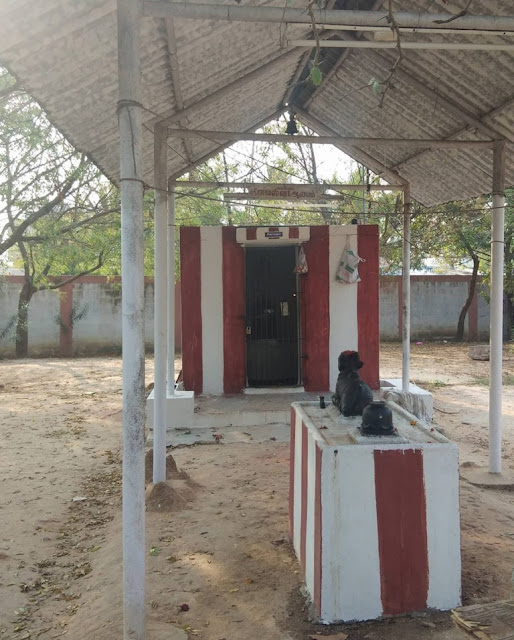
This temple is facing towards east. The temple consists of sanctum and mukha mandapam. The mukha mandapam is an asbestos shed. Nandi and Balipeedam can be found facing towards the sanctum in the mukha mandapam. Presiding Deity is called as Romasarewarar and is facing east. He is housed in the sanctum in the form of Lingam. As in other temples in Kanchipuram, there is no separate shrine of Parvathi as it is believed that Kamakshi of Kanchipuram is the common Parvathi shrine for all Shiva temples.

Connectivity

For brief details, please refer below link;

https://tamilnadu-favtourism.blogspot.com/2021/11/romasarewarar-temple-kanchipuram-connectivity.html

Location

Kesaveswarar Temple, Kanchipuram – Connectivity

Kesaveswarar Temple, Kanchipuram – Connectivity

The Temple is located at about 2.5 Kms from Kanchipuram Bus Stand, 3 Kms from Kanchipuram Railway Station and 3.5 Kms from Kanchipuram East Railway Station. The temple is located close to the Kanchi Kailasanathar Temple. Kanchipuram is located at about 18 Kms from Walajabad, 31 Kms from Sriperumbudur, 40 Kms from Chengalpattu, 60 Kms from Chennai Airport, 67 Kms from Mahabalipuram and 72 Kms from Chennai.

By Road:

Kanchipuram is most easily accessible by road. The Chennai – Bangalore National Highway, NH 4 passes the outskirts of the city. Daily bus services are provided by the Tamil Nadu State Transport Corporation to and from Chennai, Bangalore, Villupuram, Salem, Tirupati, Thiruthani, Vellore, Tiruvannamalai, Coimbatore, Tindivanam and Pondicherry. There are two major bus routes to Chennai, one connecting via Poonamallee and the other via Tambaram.

The Tamil Nadu state government operated transport corporation runs buses from Kanchipuram to most major towns in Tamil Nadu. Buses from Chennai leave for Kanchipuram every fifteen minutes from the Koyambedu interstate bus terminal. There is also an air-conditioned bus service numbered Z576 from 5.00 AM to 6.00 PM, which departs from the T-Nagar bus terminal every hour. Buses from Bangalore leave for Kanchipuram seven times a day.

By Train:

The city is also connected to the railway network through the Kanchipuram railway station. The Chengalpattu – Arakkonam railway line passes through Kanchipuram and travellers can access services to those destinations. Daily trains are provided to Pondicherry and Tirupati, and there is a weekly express train to Madurai and a bi-weekly express train to Nagercoil. Two passenger trains from both sides of Chengalpattu and Arakkonam pass via Kanchipuram.

By Air:

Nearest domestic as well as international airport is Chennai International Airport.

Kesaveswarar Temple, Kanchipuram

Kesaveswarar Temple, Kanchipuram

Kesaveswarar Temple is a Hindu Temple dedicated to Lord Shiva located in Pillaiyarpalayam, a well-known locality in Kanchipuram City in Kanchipuram District of Tamil Nadu. Presiding Deity is called as Kesaveswarar and Mother is called as Kamakshi Amman. The temple is located close to the Kanchi Kailasanathar Temple.

Legends

As per legend, Lord Vishnu, also called as Kesava had worshipped Lord Shiva at this temple. Hence, Lord Shiva came to be called as Kesaveswarar.

The Temple

This temple is facing towards east. Nandi and Balipeedam can be found facing towards the sanctum. The temple consists of sanctum and ardha mandapam. Shrines of Vinayaga and Murugan can be found at the entrance of the ardha mandapam on either side. Presiding deity is called as Kesaveswarar and is facing east. He is housed in the sanctum in the form of Lingam. Chandikeswarar shrine can be seen in his usual location. As in other temples in Kanchipuram, there is no separate shrine of Parvathi as it is believed that Kamakshi of Kanchipuram is the common Parvathi shrine for all Shiva temples.

Connectivity

For brief details, please refer below link;

https://tamilnadu-favtourism.blogspot.com/2021/11/kesaveswarar-temple-kanchipuram-connectivity.html

Location