Monday, March 23, 2020

Agastheeswarar Temple, Karuvalarcheri – The Temple

Agastheeswarar Temple, Karuvalarcheri – The Temple
This is a small east facing temple with a three-tiered Rajagopuram. Shrines of Vinayaga and Murugan can be found at the entrance of Rajagopuram. Nandi and Balipeedam can be found facing sanctum immediately after the Rajagopuram. Presiding Deity is called as Agastheeswarar. He is facing east. He is housed in the sanctum in the form of Lingam. Lord is a Swayambhu Moorthy. Brahma, Dakshinamoorthy, Vishnu, Durga and Vinayaga are the Koshta idols located around the sanctum walls.


Mother is called as Karu Valartha Nayagi / Akhilandeshwari. She is housed in an east facing shrine to the right side of the sanctum. Karu Valartha Nayagi is in Putru (ant hill) form and is a Swayambhu Moorthy. Hence no Abhishekam is performed to her and only Thaila Kappu or Oil abhishekam is performed. There is always a screen in front of Ambal to the chest height and so only the upper portion of mother is visible on normal days. The screen is removed only on Shivarathri and all the nine days of Navaratri. All archanas are done only to the Moola Sri Chakra Maha Meru and Sri chakram.


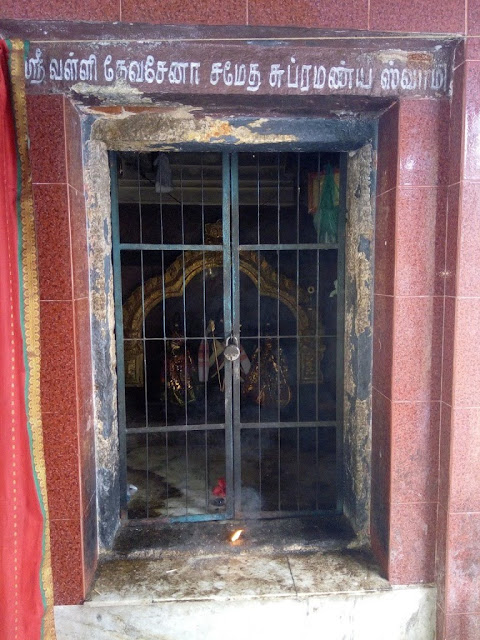
There is a separate shrine housing Sage Agasthya with his consort Lopamudra along with Nagaraja, Nagakanni and Bhairava in the temple prakaram. There are shrines for Pradhana Vinayakar, Lord Murugan with his consorts Valli & Deivanai, Chandikeswarar and Navagrahas in the temple premises. Theertham associated with this Temple is Chandra Theertham. It is situated just outside the Temple. There is a well inside the temple. Lakshmi Narayana Temple is situated adjacent to this temple. 


Thiru Nandipura Vinnagaram Temple, Nathan Kovil – Legends

Thiru Nandipura Vinnagaram Temple, Nathan Kovil – Legends
As per Hindu legend, Nandi, the sacred bull of Lord Shiva, wanted to meet Lord Vishnu at Vaikuntha and entered without securing the permission of the security guards (Dwarapalakas) of Vishnu. They cursed Nandi that his body would suffer oppressive heat. Nandi informed it to his lord Shiva, who advised him to do penance in Shenbakaranyam, a forest near modern-day Kumbakonam. Lord Vishnu was impressed by the penance of Nandi and got his curse relieved. Hence the place is called Nandipuram. An image of Nandi can be seen on one of the walls of the temple. All the shrines and water bodies associated with the temple are named after Nandi.
Goddess Lakshmi penance to get her place in Lord Vishnu chest:
Goddess Lakshmi wanted to reside in the heart of Lord Vishnu. She undertook a penance at Shenbagaranyam facing east. It is said that the Lord appeared before her (facing west) and accepted her wishes. Devotees worship Shenbagavalli of the temple during the Tamil month of Aipasi and believe that their wishes will be fulfilled. As Mother performed penance in Shenbagaranya region, She is praised as Shenbagavalli
Lord Vishnu turned west to see King Sibi offering of his own flesh:
As per legend, Emperor Sibi was a great donor. Once, Lord Indra took a form of a hunter and Lord Agni transformed himself as a pigeon. The pigeon sought Sibi’s help and to help the poor bird, he came forward to give his own flesh equal to the pigeon’s weight to the hunter. So, he sat in the west plate of the balance while the pigeon in the east. Lord Vishnu, originally faced the east, turned westward to look at King Sibi saving a bird by providing flesh from his thighs and blessed the King with his darshan.
Shenbagaranyam:
This place was once a forest of Shenbagam flowers and hence is known as Shenbagaranyam, meaning forest of Shenbagam.
Dakshina Jagannatham:
As this temple resembles the Puri Jagannatha temple, it is also known as Dakshina Jagannatham.

Thiru Nandipura Vinnagaram Temple, Nathan Kovil – Poojas & Festivals

Thiru Nandipura Vinnagaram Temple, Nathan Kovil – Poojas & Festivals
Poojas:
The temple priests perform the pooja (rituals) during festivals and on a daily basis. As at other Vishnu temples of Tamil Nadu, the priests belong to the Vaishnavite community, a Brahmin sub-caste. The temple follows the Thenkalai sampradaya and agamas of South Indian Vaishnavism. The temple rituals are performed six times a day: Ushathkalam at 7 a.m., Kalasanthi at 8:00 a.m., Uchikalam at 12:00 p.m., Sayarakshai at 6:00 p.m., Irandamkalam at 7:00 p.m. and Ardha Jamam at 10:00 p.m.
Each ritual has three steps: alangaram (decoration), naivethanam (food offering) and deepa aradanai (waving of lamps) for both Srinivasan and Shenbagavalli. During the last step of worship, Nadaswaram (pipe instrument) and tavil (percussion instrument) are played, religious instructions in the Vedas (sacred text) are recited by priests, and worshippers prostrate themselves in front of the temple mast.
Festivals:
There are weekly, monthly and fortnightly rituals performed in the temple. Two festivals are celebrated every year in the temple. Pavitrotsavam is a festival organised in the temple by Karimaran Kalai Kappagam of Triplicane, Chennai, every July. The festive images of the deity are taken out in procession and special poojas are performed during the occasion. The Fridays during the Tamil month of Aipasi are believed to be auspicious to worship Shenbagavalli. Vaikuntha Ekadasi is devotionally celebrated in the temple in December-January.

Thiru Nandipura Vinnagaram Temple, Nathan Kovil – Religious Significance

Thiru Nandipura Vinnagaram Temple, Nathan Kovil – Religious Significance
Divya Desams:
The temple is revered in Nalayira Divya Prabandham, the 7th – 9th century Vaishnava canon, by Thirumangai Azhwar in ten hymns. The temple is classified as a Divyadesam, one of the 108 Vishnu temples that are mentioned in the book. This Temple is considered as one of the 40 Divyadesams in Chozha Nadu. It ranks 21 among the 40 DivyaDesams.
Symbol of Unity between Shaivism and Vaishnavism:
The temple is a symbol of unity between the two sects of Hinduism, namely, Vaishnavism and Saivism and Nandhi the sacred bull Shiva and image of Brahma are depicted in the main sanctum.
The temple is considered as one of the nine Vaishnava Navagraha temples of Tamil Nadu and is a part of the popular Navagraha pilgrimage in the state. This Temple is associated with the planet Moon (Chandran). The planets are believed to influence the horoscope computed based on time of one's birth and subsequently influence the course of life. Each of the planets are believed to move from a star to another during a predefined period and thus sway over an individual's fortunes.
The Navagrahas, as per Hindu customs, are believed to provide both good and bad effects for any individual and the bad effects are mitigated by prayers. As in other Navagraha temples, the common worship practices of the devotees include offering of cloth, grains, flowers and jewels specific to the planet deity. Lighting a set of lamps is also commonly followed in the temple. As per belief, the energies distributed cyclically by Navagrahas can be channeled based on remedial measures.
Vaishnava Navagraha Temples of Tamil Nadu are;
Five Vinnagaram Temples:
This Temple is considered as one of the 5 Vinnagaram temples. The other four Vinnagaram Temples are;
Dakshina Jagannatham:
As this temple resembles the Puri Jagannatha temple, it is also known as Dakshina Jagannatham.
Named after Nandi:
All the shrines and water bodies associated with this temple are named after Nandi, the sacred bull of Lord Shiva.

Wednesday, March 4, 2020

Choleeswarar Temple, Tholur, Namakkal

Choleeswarar Temple, Tholur, Namakkal
Choleeswarar Temple is a Hindu Temple dedicated to Lord Shiva located in Tholur Village in Namakkal Taluk in Namakkal District of Tamilnadu. Presiding Deity is called as Choleeswarar and Mother is called as Visalakshi. This Temple is considered as Rahu Kethu Parihara Sthalam. The Temple is considered as Thevara Vaippu Sthalam as Devaram hymns had a mention about this Temple.
History
The Temple was believed to be built by Kongu Cholas. The Temple is believed to be around 1200 years old.
The Temple
This is an east facing Temple with an entrance on the southern side. The Temple is enclosed by compound walls. Nandi housed in a four pillared Mandapam and Balipeedam can be found facing the sanctum. Stone Deepa Sthambam can be found outside the sanctum. The Sanctum Sanctorum consists of Mukha Mandapam, Antrala, Artha Mandapam and Sanctum.
Presiding Deity is called as Choleeswarar and is facing east. He is housed in the sanctum in the form of Lingam. Lord is a Swayambhu Moorthy. Mother is called as Visalakshi. She is housed in a separate south facing shrine. She looks beautiful with everlasting smile in her face. Her idol and Thiruvasi are carved in single granite stone, a unique feature in this temple.
Naga Idols can be found near the entrance of the Temple. There are shrines for Ganesha and Chandikeswarar in the Temple premises. There is an inscription dated to 16th Century AD in one of the pillars of Artha Mandapam. It talks about the grant of oil and cotton to the temple in lighting lamps. There is another inscription in a pillar in Mukha Mandapam.
Temple Opening Time
The Temple remains open from 06.00 AM to 10.00 AM. The Temple conducts one Kala Pooja only.
Festivals
Shiva related festivals and monthly Pradoshams are celebrated in this Temple.
Literary Mention
For brief details, please refer below link;
Prayers
Unmarried girls pray to Lord and Mother for marriage alliances. This Temple is also considered as Rahu Kethu Parihara Sthalam.
Contact
 Choleeswarar Temple,
Tholur, Namakkal Taluk,
Namakkal District – 637 017
Mobile: +91 91595 64006 / 98656 17121
Connectivity
The Temple is located at about 3 Kms from Aniyapuram, 11 Kms from Mohanur Railway Station, 12 Kms from Mohanur, 13 Kms from Namakkal, 13 Kms from Namakkal Bus Stand, 15 Kms from Namakkal Railway Station and 95 Kms from Trichy Airport. The Temple is situated in Tholur, 3 Kms off Aniyapuram on the Namakkal – Mohanur Route.
Location

Choleeswarar Temple, Tholur – Literary Mention

Choleeswarar Temple, Tholur – Literary Mention
The Temple is considered as Thevara Vaippu Sthalam as Devaram hymns sung by Appar had a mention about this Temple. The Temple is mentioned in 6th Thirumurai in 70th Patikam in 5th Song and 6th Thirumurai in 71st Patikam in 4th Song.
6-70-5:
கொடுங்கோளூர் அஞ்சைக் களஞ்செங் குன்றூர்
கொங்கணங் குன்றியூர் குரக்குக் காவும்
நெடுங்களம் நன்னிலம் நெல்லிக் காவும்
நின்றியூர் நீடூர் நியம நல்லூர்
இடும்பா வனமெழுமூர் ஏழூர் தோழூர்
எறும்பியூர் ஏராரும் ஏம கூடங்
கடம்பை யிளங்கோயில் தன்னி லுள்ளுங்
கயிலாய நாதனையே காண லாமே
6-71-4:
பிறையூருஞ் சடைமுடியெம் பெருமா னாரூர்
பெரும்பற்றப் புலியூரும் பேரா வூரும்
நறையூரும் நல்லூரும் நல்லாற் றூரும்
நாலூருஞ் சேற்றூரும் நாரை யூரும்
உறையூரும் ஓத்தூரும் ஊற்றத் தூரும்
அளப்பூரோ மாம்புலியூர் ஒற்றி யூருந்
துறையூருந் துவையூருந் தோழூர் தானுந்
துடையூருந் தொழவிடர்கள் தொடரா வன்றே

Paranjothi Eswarar Temple, Thanjakkur – Legends

Paranjothi Eswarar Temple, Thanjakkur – Legends
Lord Shiva granting Paranjothi Darshan to Lords:
Lord Vishnu and Lord Brahma along with the Devas met Lord Shiva in Kailasha and said that they were worshipping him daily and piously demanded his Paranjothi Darshan. Lord said that he was on earth in Vilwa forest formlessly and advised them to worship him there for the Paranjothi darshan. All came down to earth, discovered the Vilwa Vana, created a tank, installed a Shiva Linga and worshipped Lord. Lord wanted to test their determination and created troubles in the puja through Makali and Veerakali. 
They continued the puja with a steadfast mind. Finally, Lord Shiva himself came there in the guise of an aged person and gave troubles to disturb their pujas. Lords Vishnu and Brahma and the Devas could not be stopped from their rigid worship. Pleased with their determination, Lord Shiva granted his Paranjothi darshan aspired by them on a Monday in the Aavani (August-September). Later, Mothers Parvathi, Lakshmi and Saraswathi and Lord Muruga worshipped Lord for the same darshan.
Rudra Kodeeswarar:
One Crore Rudras worshipped Lord Shiva of this Temple, Hence, the Lord is also called as Rudra Kodeeswarar.
People who worshipped Shiva in this place:
Lakshmi, Saraswathi, Indirani (wife of Indira), Lord Rama, Lakshmana, Sri Hanuman, Sundarar, Manickavasagar, Sage Agasthya, Sage Gautama, King Maran, King Maraivanan and King Thanjai Vanar had darshan of Lord in this temple.
Poyya Mozhi Pulavar:
Tamil Poet Poyya Mozhi Pulavar who wrote Thanjai Vaanan Kovai, was born in this place. He prayed to Lord Shiva of this Temple for a scholarly achievement and got relieved of his poverty.

Bhairavanatha Swami Temple, Thagattoor – The Temple

Bhairavanatha Swami Temple, Thagattoor – The Temple
This is the only temple in Tamilnadu where Lord Bhairavanatha Swami graces from the sanctum sanctorum. The place, Thagattoor is a Tamil translation from the Sanskrit word Yantra made mainly of copper sheets with some diagrams. Traditionally Yantras as Sri Chakra are installed in temples.


There is one such in this temple called Panchatchara Yantra installed in the Maha Mandapam of this Temple. There is also the idol of Sattainathar, the procession deity of the temple. There is a shrine for Shivaloganathar and Shivagama Sundari in the prakaram behind the sanctum. As Lord Bhairava came with Sri Anjaneya, there are shrines for Lord Kasi Viswanathar, Mother Visalakshi. 


There are also shrines for Ganapathy, Subramaniya with consorts Valli & Deivanai, Durga and Chandikeswarar in the Temple premises. There is also a tank before the temple. There is a shrine on one side of the tank for Rowther with Karuppayi and Kathayee. He is the guardian deity of the temple. Sthala Vriksham is Jamun Tree.


Bhairavanatha Swami Temple, Thagattoor – Legends

Bhairavanatha Swami Temple, Thagattoor – Legends
Kalabhairava of Kasi:
Lord Rama decided to perform Shiva puja in Rameswaram to cleanse himself of the sin of killing Ravana in the Sri Lanka war. He sent Sri Anjaneya to Kasi to get him a Shivalinga from there. When he returned with the Linga, Lord Kalabhairava also came with him. Kalabhairava is the security God of temples. While closing the temples, the keys would be placed before Kalabhairava. Anyone attempting to even touch the key would meet with his end. On the way to Rameshwaram, Hanuman visited this place. Kalabhairava, who accompanied him, chose to stay in Thagattoor itself.
Birth of Bhairavar:
The book, Abhidana Chintamani speaks about the birth of Lord Bhairava. A demon, Tharuka Suran performed penance and demanded Lord Shiva to bless him with immortality. Lord Shiva told him that everything born should meet with death one day and suggested that he may ask for one who could not cause him death. Agreeing, Tharuka Suran asked that he could not be killed by anyone except by a woman. He thought that as man with high physical prowess, a woman cannot be able to kill him. He began his arrogant activities and the time for his end came. Devas of the celestial world appealed to Lord Shiva to protect them from the demon.
Mother Parvathi created a spark from the poison once devoured by Lord Shiva. It took the form of a woman. The poison was called Kalam; hence the woman was named Kali. Kali turned on the direction of Tharuka Suran furiously. Her fury turned into fire and burnt the demon. Then the Kali converted the fire into a child, breast-fed it. Then Lord Shiva made Kali and the child enter his body, from which 8 children came out. Lord Shiva amalgamated the 8 into one and named it Bhairava.
Thagattoor:
The place, Thagattoor is a Tamil translation from the Sanskrit word Yantra made mainly of copper sheets with some diagrams. Traditionally Yantras as Sri Chakra are installed in temples and there is one such in this temple also.